Gradually it was disclosed to me that the line separating good and evil passes not through states, nor between classes, nor between political parties either - but right through every human heart - and through all human hearts. This line shifts. Inside us, it oscillates with the years. And even within hearts overwhelmed by evil, one small bridgehead of good is retained. And even in the best of all hearts, there remains... an unuprooted small corner of evil.I wish I had something interesting to say about this quote, but I don't. I just thought I'd share it with all six of you.
- Aleksandr Solzhenitsyn
Saturday, December 31, 2011
Meditation Material
Tuesday, December 27, 2011
25 Reasons Why I'm Angsty
- I am very silly and self-absorbed.
- I am confused about who I am and why.
- I have lost the direction that I felt so strongly for all of my cognizant life.
- I have rare good connections with my family members, but it seems that nearly every time I do I find a way to mess it up near the end.
- I have failed more social obligations in the past few months than in the previous four years.
- I want to move back home.
- I don't know anyone from back home anymore.
- I want to become orthodox.
- I want to become an evangelical missionary.
- I want to fall in love and get married and have children.
- I have ended (certain friends would say "sabotaged") every relationship I have been in for ultimately selfish and questionable reasons.
- I know that getting into a relationship right now would be like trying to bake a cake in the middle of a tornado.
- My parents want me to get married and have children.
- My littlest brother wants me to get married and have children. My deadline is his 14th birthday, two years.
- Every time I go to church, I feel like I truly have "found the true faith."
- That make me an arrogant jerk.
- My orthodox friends are partisan to orthodoxy.
- My protestant friends are partisan to protestantism.
- I think both are good. Which is to say, neither is evil.
- I am an external processor.
- I don't want to talk about it.
- I wish I was a better person.
- I wish I wasn't so cranky and whiny all the time.
- I want to quit smoking.
- No I don't.
Monday, December 5, 2011
Sorry, Bro
My Brother posted the following video on my facebook wall with a very simple question. He said, "huh... what do you think?" I started writing a response, but it got so long and so rambly and so off topic that the only place where it would be appropriate is this blog, which is, if anything, a collection of long, rambly, off topic things that I wrote.
Please, be aware that what follows is very much in progress inside my head. A wise man once told me to always write my theology in pencil. There's been a lot of erasing and re-writing recently.
He's got a lot of valid criticism for the ways in which the church has used the doctrine of the afterlife. He also says a lot of things that the Orthodox church says about the nature of our purpose on earth, and our relationship with God. That said, I believe that he is doing something that is highly dangerous.
He's throwing out the baby with the bathwater. There are myriad doctrines of the afterlife within the myriad christian traditions. By boiling the doctrine of hell down to a "nothing but," in this case nothing but a control tactic, he's consequently disregarding 2000 years of earnest and holy men and women who also struggled with the same questions he has and came to vastly different conclusions within the framework of their own traditions, which I would argue can be much harder than leaving behind one's tradition completely.
All religion is based in one form of tradition or another. No matter how hard we may try to ignore tradition, it is an irrevocable part of any religious or spiritual movement. These traditions exist because there is something in them that points toward God, as he says. However, he claims that he "matured through his tradition" and I find that to be extremely suspect and a very slippery slope.
Traditions keep us in line. The protestant tradition of solo scriptura is a way to test ourselves and one another based on a common agreement, that scripture is the ultimate authority in matters of doctrine and practice. The traditions of the Nicene Creed and the church councils that created it keep Christians worldwide trinitarian, for the most part.
It is my belief that these traditions are, as this man claims, creations of humanity. But, creations of humanity guided by the Holy Spirit. If we believe in an active God, which if we accept the christian scriptures, or even the idea of Jesus Christ (emphasis on Christ), then we must. Then I feel that we must also believe that christian traditions have been guided, at least in part, by the hand of God.
I agree that God is uncontainable. No tradition or theology can fully encompass, or even scratch the surface of who and what God is. I believe that human diversity is evidence of this. Human beings, all very different in so many ways, and yet similar in so many more, are all created in the image of God. But then how can we be different? Are there multiple images of God? No, as the Shema has proclaimed since Moses, the Lord your God is one. We are, instead, like seven billion mirrors, aimed at the same infinite skyline. We, together, reflect the image of God, and every one of us contains within us the image of God. I'm coming to suspect that this analogy applies to various religious traditions as well.
Of course, every analogy falls apart at some point, and I do believe that some people (and some traditions) reflect more of God than others, but my point is that when we decide to blaze our own trail outside the realm of established tradition we risk making up a spirituality and a faith that is utterly and completely tailored to our own emotional leanings. In essence, we all become our own personal Popes (only without the lifetimes of devotion to God, which I feel is a bit of an important aspect to the Papacy).
Of course, there have been many incredible Christians who have broken from their traditions, Luther being perhaps the most prominent, who started their own traditions which do reflect the image of God. I'm not saying that it's completely wrong to break from tradition, just very very dangerous. Most of those people who started their own traditions did so with much fear and trembling, prayer and pain. They also kept much of what came from their original traditions.
None of this, however, says anything about Hell. I don't know what to think about Hell, exactly. But, I will say that I feel very drawn towards the Orthodox understanding of the afterlife. It's complicated, but it's probably best described by C. S. Lewis at the end of The Last Battle.
[T]here came to meet me a great Lion... I fell at his feet and thought, Surely this is the hour of death, for the Lion (who is worthy of all honour) will know that I have served Tash all my days and not him... But the Glorious One bent down his golden head and touched my forehead with his tongue and said, Son, thou art welcome. But I said, Alas, Lord, I am no son of thine but the servant of Tash. He answered, Child, all the service thou hast done to Tash, I account as service done to me. Then by reasons of my great desire for wisdom and understanding, I overcame my fear and questioned the Glorious One and said, Lord, is it then true, as the Ape said, that thou and Tash are one? The Lion growled so that the earth shook (but his wrath was not against me) and said, It is false. Not because he and I are one, but because we are opposites, I take to me the services which thou hast done to him. For I and he are of such different kinds that no service which is vile can be done to me, and none which is not vile can be done to him. Therefore if any man swear by Tash and keep his oath for the oath's sake, it is by me that he has truly sworn, though he know it not, and it is I who reward him. And if any man do a cruelty in my name, then, though he says the name Aslan, it is Tash whom he serves and by Tash his deed is accepted. Dost thou understand, Child? I said, Lord, thou knowest how much I understand. But I said also (for the truth constrained me), Yet I have been seeking Tash all my days. Beloved, said the Glorious One, unless thy desire had been for me thou wouldst not have sought so long and so truly. For all find what they truly seek. (The Last Battle, Chapter 15)
But, that's cheating, because that's more about Heaven, isn't it?
As far as I understand it, the Orthodox believe that upon death, our spirits are at rest. There will come a day when all are judged by Christ. That judgement, however, does not take the form of a courtroom drama, or a weighing of some mystical scales, good deeds on one side, bad deeds on the other. No one has any decisions to make.
The Orthodox believe that one of the best ways to describe God is that of a Holy Fire. No man can see God and live because if we were exposed to the Divine Fire directly, we would be unable to stand the force of energy. Seeking after God is about discovering a spark of that Divine Fire within each of us and our neighbors (the image of God) and in the whole of creation, and cultivating it.
At the final judgement, those who have cultivated the Divine Fire within themselves and the world will be in pure ecstasy and joy. Those who have run away from the Divine Fire, neglected it, disdained it, will find themselves in incredible pain, unable to stand in the presence of God, they will, depending on who you talk to, either be cast out of God's presence, or run away from it. C. S. Lewis also explained this idea pretty well in The Great Divorce.
This is not a punitive thing. It is a consequence, true, but more along the lines of developing cancer after 50 years of chain smoking rather than receiving a fine for having expired tags.
So. What do I think? Is this guy completely crazy and should we ignore everything he says? No. Is he completely correct and we should follow his teachings and have him lead us spiritually? No. It's complicated. The man has valid things to say, but makes some very dangerous, in my opinion, mistakes.
Finally, RE: Hell. Do I believe in Hell? Yes. Do I believe in the same version of Hell that we grew up understanding, the version on Looney Toons, South Park and The Far Side comics? No. I do not. Again, it's complicated.
Friday, November 25, 2011
Simple Minded Kids
Twenty five years ago, my father lay on the floor of his room at the Air Force Academy in Colorado. He scanned through the spectrum on the radio that he wasn't allowed to have for the first half of that year listening for the song that played over the credits of The Breakfast Club, trying to decide if he would forget about her.
He'd fallen in love. He'd given her a ring with the last of his money, but he wanted to fly. He was a brain surrounded by brains. She was something else somewhere else. She was a question mark. He was halfway through an exclamation point.
He chose her.
Tonight, I sit in my parents kitchen in Oregon. I scroll through my iPod that's very near death looking for the song that I listened to on repeat one year ago while packing to go home, trying to decide if I will take only what I need from them.
I'd fallen in love. I'd given promises in spirit, if not in word, but I want to be sure. I am a mystic, surrounded by mystics. They are sound evangelicals across the pacific. They are the exclamation point. I am on the curve of a question mark.
I am undecided.
I wonder if my father ever regretted his choice. Does he ever wonder what would have happened if he would have flown helicopters in the Gulf War? Does he wonder how high he could have climbed in the ranks? Does he wonder if he would have found someone else to marry? Had different kids? Made a little more money? A little less?
"I could have one or the other," he said tonight. I have said the same. Are these false dichotomies? Can I do both? What happens when you combine an exclamation point with a question mark? My dad didn't think to try, ergo sum.
Will I forget about them? Will I take only what I need from them? Will I ever regret this decision, or will I never look back?
He'd fallen in love. He'd given her a ring with the last of his money, but he wanted to fly. He was a brain surrounded by brains. She was something else somewhere else. She was a question mark. He was halfway through an exclamation point.
He chose her.
Tonight, I sit in my parents kitchen in Oregon. I scroll through my iPod that's very near death looking for the song that I listened to on repeat one year ago while packing to go home, trying to decide if I will take only what I need from them.
I'd fallen in love. I'd given promises in spirit, if not in word, but I want to be sure. I am a mystic, surrounded by mystics. They are sound evangelicals across the pacific. They are the exclamation point. I am on the curve of a question mark.
I am undecided.
I wonder if my father ever regretted his choice. Does he ever wonder what would have happened if he would have flown helicopters in the Gulf War? Does he wonder how high he could have climbed in the ranks? Does he wonder if he would have found someone else to marry? Had different kids? Made a little more money? A little less?
"I could have one or the other," he said tonight. I have said the same. Are these false dichotomies? Can I do both? What happens when you combine an exclamation point with a question mark? My dad didn't think to try, ergo sum.
Will I forget about them? Will I take only what I need from them? Will I ever regret this decision, or will I never look back?
Monday, November 7, 2011
Wednesday, November 2, 2011
Something I Think I Can Say for Certain(ish)
(note: the following is self-indulgent, read at your own peril)
I think I have a clear idea of who I want to be. It's not very specific, in fact it's quite vague, but I think I've got it figured out... Kinda.
In Saint Spiridon Orthodox Cathedral, near REI, the dome portrays icons of Christ, The Theotokos, and others. Among them is an icon of Saint John the Baptist. The icon of John the Baptist, I am told by various books and podcasts, often portrays John leaning, facing, or pointing to one side of the icon. It is intended that the icon be situated so that the subject is angled, directing the viewer's eyes, towards the icon of Christ, just as he directed the attention of others towards Christ in life. In Saint Spiridon's he is situated to the immediate right of Christ, and he is pointing left.
That's what I want to be. I want to be an icon of John the Baptist. Not literally. That would be weird, but I think you get the idea. I want to point towards Christ. I want to shift any attention that might be placed on me, and move it to Christ. I do not want this to be forced, or awkward, or jarring, but natural, true, and calm. I have looked at the icon of John the Baptist many times without even realizing that, upon following his gaze, my eyes and mind always returned to Christ.
There's a problem though. I am an exceedingly passionate individual, and in my passion, I am prone to do silly, even forced, awkward and jarring things. I say what I ought not to say, and I do what I ought not to do. I want to learn to swim, so I dive into the deep-end. I want to understand what's happening in my own mind, so I spill it all over my friends and let them deal with it for a while. I am constantly in danger of plummeting my life into utter chaos by impulsively acting on some misguided passion.
I want to be tempered. I want to chill out. I want to get and keep a little bit of perspective on my life. I want to be free from my own stupid impulsiveness.
Then again, John the Baptist was a pretty passionate guy who didn't know when to keep his mouth shut, and now he's got an icon painted onto the dome of Saint Spiridon Orthodox Cathedral near REI. There are worse things to be than passionate, I suppose.
I think I have a clear idea of who I want to be. It's not very specific, in fact it's quite vague, but I think I've got it figured out... Kinda.
In Saint Spiridon Orthodox Cathedral, near REI, the dome portrays icons of Christ, The Theotokos, and others. Among them is an icon of Saint John the Baptist. The icon of John the Baptist, I am told by various books and podcasts, often portrays John leaning, facing, or pointing to one side of the icon. It is intended that the icon be situated so that the subject is angled, directing the viewer's eyes, towards the icon of Christ, just as he directed the attention of others towards Christ in life. In Saint Spiridon's he is situated to the immediate right of Christ, and he is pointing left.
That's what I want to be. I want to be an icon of John the Baptist. Not literally. That would be weird, but I think you get the idea. I want to point towards Christ. I want to shift any attention that might be placed on me, and move it to Christ. I do not want this to be forced, or awkward, or jarring, but natural, true, and calm. I have looked at the icon of John the Baptist many times without even realizing that, upon following his gaze, my eyes and mind always returned to Christ.
There's a problem though. I am an exceedingly passionate individual, and in my passion, I am prone to do silly, even forced, awkward and jarring things. I say what I ought not to say, and I do what I ought not to do. I want to learn to swim, so I dive into the deep-end. I want to understand what's happening in my own mind, so I spill it all over my friends and let them deal with it for a while. I am constantly in danger of plummeting my life into utter chaos by impulsively acting on some misguided passion.
I want to be tempered. I want to chill out. I want to get and keep a little bit of perspective on my life. I want to be free from my own stupid impulsiveness.
Then again, John the Baptist was a pretty passionate guy who didn't know when to keep his mouth shut, and now he's got an icon painted onto the dome of Saint Spiridon Orthodox Cathedral near REI. There are worse things to be than passionate, I suppose.
Saturday, October 29, 2011
Mercy
I am worried about my friend. He's very sad. He's very lonely. I can't help him. I've tried. I really have. He's just so sad.
He cannot even envision tomorrow. It's not that he doesn't think anything good will happen. It's that he literally can't imagine what the future could possibly look like.
He's been cast totally adrift. He's lost his anchor. The anchor that he's held onto for the past five years. It's gone off to buy condoms and block him on facebook. He's in a dark place.
I've tried to comfort, and I've tried to provide hope, but I just don't understand the pain he's going through. I can't communicate on his level because I'm not there with him, and I can't be. The depth of his sorrow is such that I don't know if anyone who isn't actively feeling the same kind of sorrow could even begin to understand what his life is like.
I have nothing left to offer but prayer to a God I don't understand.
Lord, have mercy.
He will most likely never read this, or know that this even exists, but I will use this opportunity to ask you, my few and longsuffering readers, to pray for my broken friend. Pray for mercy. His suffering is more than he can bear, and I can't even bear it with him.
Lord, have mercy.
Lord, have mercy.
Lord, have mercy.
He cannot even envision tomorrow. It's not that he doesn't think anything good will happen. It's that he literally can't imagine what the future could possibly look like.
He's been cast totally adrift. He's lost his anchor. The anchor that he's held onto for the past five years. It's gone off to buy condoms and block him on facebook. He's in a dark place.
I've tried to comfort, and I've tried to provide hope, but I just don't understand the pain he's going through. I can't communicate on his level because I'm not there with him, and I can't be. The depth of his sorrow is such that I don't know if anyone who isn't actively feeling the same kind of sorrow could even begin to understand what his life is like.
I have nothing left to offer but prayer to a God I don't understand.
Lord, have mercy.
He will most likely never read this, or know that this even exists, but I will use this opportunity to ask you, my few and longsuffering readers, to pray for my broken friend. Pray for mercy. His suffering is more than he can bear, and I can't even bear it with him.
Lord, have mercy.
Lord, have mercy.
Lord, have mercy.
Wednesday, October 26, 2011
Perspective (as in: I need some)
I'm having a hard time coming up with some kind of quasi objective perspective on these multiple branching pathways in front of me. Perhaps I've spent too much time thinking about the pros and cons tonight, or perhaps I need to listen to all the pros and cons a little more often.
Is The Virgin Mary the ever virgin and blessed Theotokos, or is she mother of Jesus and his brother James, among others. Does it really matter? Do the seven ecumenical councils hold the same authority as the scripture they canonized? Were they directed by the Holy Spirit on all matters spiritual, or only on matters pertaining to certain doctrines (which I may choose)?
Why don't we protestants talk about the councils, and the early fathers and mothers? Why don't we talk about the Arian and Nestorian controversies, without which we would not have the doctrine of the incarnation as it stands today, that Christ was fully God and fully human? Why don't we talk about the formation of the scriptures, and the competing canons that were passed around for generations, and why we can trust the canon as it stands?
Am I being seduced by the aesthetics of the church, by the ancient traditions, by the stability of the hierarchical power structure, by the odd comfort of the ethnically distinct communicants? Or, am I actually, really, honestly, truly being drawn to something that is actually, really, honestly, truly sacred, holy and true? Have I found "the one true faith?" Or, am I just attracted to a religious package that's already been assembled for me? No more of this "some doctrinal assembly required" crap. I'm way too lazy for that anymore.
Also, girls. Blech. Sometimes, I just wish that I could be a monk. Unfortunately, I'm a hopeless romantic who's addicted to falling in love and abandoning said lovers. I'm afraid that if I became a monk and devoted myself to the life of the church as a husband to a wife, perhaps I'd just end up abandoning her as well.
Is The Virgin Mary the ever virgin and blessed Theotokos, or is she mother of Jesus and his brother James, among others. Does it really matter? Do the seven ecumenical councils hold the same authority as the scripture they canonized? Were they directed by the Holy Spirit on all matters spiritual, or only on matters pertaining to certain doctrines (which I may choose)?
Why don't we protestants talk about the councils, and the early fathers and mothers? Why don't we talk about the Arian and Nestorian controversies, without which we would not have the doctrine of the incarnation as it stands today, that Christ was fully God and fully human? Why don't we talk about the formation of the scriptures, and the competing canons that were passed around for generations, and why we can trust the canon as it stands?
Am I being seduced by the aesthetics of the church, by the ancient traditions, by the stability of the hierarchical power structure, by the odd comfort of the ethnically distinct communicants? Or, am I actually, really, honestly, truly being drawn to something that is actually, really, honestly, truly sacred, holy and true? Have I found "the one true faith?" Or, am I just attracted to a religious package that's already been assembled for me? No more of this "some doctrinal assembly required" crap. I'm way too lazy for that anymore.
Also, girls. Blech. Sometimes, I just wish that I could be a monk. Unfortunately, I'm a hopeless romantic who's addicted to falling in love and abandoning said lovers. I'm afraid that if I became a monk and devoted myself to the life of the church as a husband to a wife, perhaps I'd just end up abandoning her as well.
Tuesday, October 18, 2011
Europa
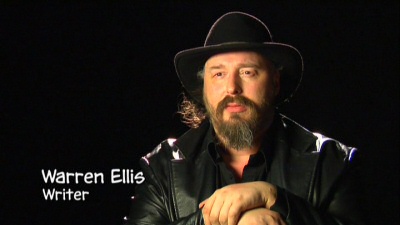
(Note: the following is only partially factual. The inspiration for this idea came from Ocean by Warren Ellis. For more information on Europa, see Wikipedia or follow this link.)
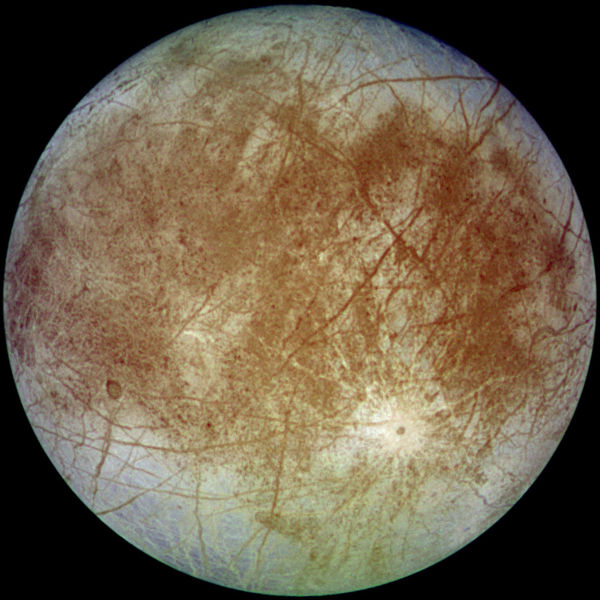
Europa is one of the six moons of Jupiter. It's an ocean moon, but without much of an atmosphere to trap heat, the ocean is covered in a thick layer of ice. No one knows what exists, or perhaps lives, in the depths of that ocean. But, lifeless or otherwise, we do know that the ocean of Europa is a turbulent place. The tides on planet Earth are mainly influenced by our own celestial little sibling, the moon. Europa has it the other way around, and then some. Europa's tides are predominately dictated by the gravitational pull of Jupiter, but the other five moons of Jupiter also have their own effects which are far from incidental.
With the combined weight of six heavenly bodies having their say on the shift and flow of the liquid world, the currents under Europa's ice are like that unto a worldwide typhoon. Or perhaps six worldwide typhoons, competing for dominance over control of the ocean's flow. The water on Europa is constantly shifting, moving, battling itself. The tide of Callisto crashes into the tide of Io with the eruptive power of a nuclear warhead. The tides of Ganymede and Jupiter VI try to pull away from the tide of father Jupiter himself, as water rises and falls from the corners of the tide, like six iterations of Niagara falls in reverse. The churning miasma shakes the interior of the planet, like a child shakes a snowglobe.
Meanwhile, the placid surface of the moon does not go unaffected. Europa is covered in linea, which is just the Latin word for lines. Linea are gigantic cracks in the ice that stretch for hundreds of miles across the surface of the frozen world, the tectonic result of the chaos below. These cracks appear in straight lines, gigantic gouges across the glittering landscape of the moon. Orderly stress fractures, almost in opposition to the watery chaos that created them.
Europa is still cooling. The older linea are more prevalent, and as time passes, and the ice thickens, linea become infrequent occurrences, and the old ones become shallower, less distinct. There will always be scars on the planet's surface, but they will pale in comparison to the deep wounds they once were. Europa is coalescing from a confused and chaotic mess of water, ice, and mud into a serene, frozen moon.
At least, that's the plan. But, the waters are not an easy thing to tame. Europa has taken millions of years and suffered the creation of thousands of linea to get to the semi-tranquil place it is today, but it would not take much to set the entire process back to the beginning. All it would take is a large stray asteroid from Jupiter's ring, or one rogue comet to brush Europa's gravitational field, and the uneasy balance would be thrown into chaos.
Europa has had its scares before. Minor meteors have affected the surface of the moon with little frozen craters. Inconsequential blemishes on an otherwise smoothing surface. But, Europa has never truly faced The Big One. Meteors can crack ice, but something with serious gravity could reach through the glacial hull and agitate the already furious waters below. The oceans would revolt. Geysers tall as mountains would erupt from the brittle shell. Tidal waves of ice would sweep across frozen plains sending shards of frigid arrows cascading in every direction. Linea deep and long enough to put any previous to shame would develop, and the crystalline sphere of Europa would take on the optical qualities of the universe's largest disco ball.
So, if you ever find yourself mindlessly watching PBS at 2 am and you stuble across another low budget episode of Jack Horkheimer: Star Gazer, and Jack mentions that Jupiter is quite visible this time of year. Or, if you happen to be gazing up at a brilliant sky and you notice that gas giant hovering just over the horizon. Look up and offer a prayer for the anxious Europa, trying to hold everything together, trying to mature into a solid, stable world, but constantly beset by the torment of possible complete relapse into chaos. Next time you follow Uncle Jack's advice and stargaze, pause for a minute, and have some sympathy for the heavens.
Europa is one of the six moons of Jupiter. It's an ocean moon, but without much of an atmosphere to trap heat, the ocean is covered in a thick layer of ice. No one knows what exists, or perhaps lives, in the depths of that ocean. But, lifeless or otherwise, we do know that the ocean of Europa is a turbulent place. The tides on planet Earth are mainly influenced by our own celestial little sibling, the moon. Europa has it the other way around, and then some. Europa's tides are predominately dictated by the gravitational pull of Jupiter, but the other five moons of Jupiter also have their own effects which are far from incidental.
With the combined weight of six heavenly bodies having their say on the shift and flow of the liquid world, the currents under Europa's ice are like that unto a worldwide typhoon. Or perhaps six worldwide typhoons, competing for dominance over control of the ocean's flow. The water on Europa is constantly shifting, moving, battling itself. The tide of Callisto crashes into the tide of Io with the eruptive power of a nuclear warhead. The tides of Ganymede and Jupiter VI try to pull away from the tide of father Jupiter himself, as water rises and falls from the corners of the tide, like six iterations of Niagara falls in reverse. The churning miasma shakes the interior of the planet, like a child shakes a snowglobe.
Meanwhile, the placid surface of the moon does not go unaffected. Europa is covered in linea, which is just the Latin word for lines. Linea are gigantic cracks in the ice that stretch for hundreds of miles across the surface of the frozen world, the tectonic result of the chaos below. These cracks appear in straight lines, gigantic gouges across the glittering landscape of the moon. Orderly stress fractures, almost in opposition to the watery chaos that created them.
Europa is still cooling. The older linea are more prevalent, and as time passes, and the ice thickens, linea become infrequent occurrences, and the old ones become shallower, less distinct. There will always be scars on the planet's surface, but they will pale in comparison to the deep wounds they once were. Europa is coalescing from a confused and chaotic mess of water, ice, and mud into a serene, frozen moon.
At least, that's the plan. But, the waters are not an easy thing to tame. Europa has taken millions of years and suffered the creation of thousands of linea to get to the semi-tranquil place it is today, but it would not take much to set the entire process back to the beginning. All it would take is a large stray asteroid from Jupiter's ring, or one rogue comet to brush Europa's gravitational field, and the uneasy balance would be thrown into chaos.
Europa has had its scares before. Minor meteors have affected the surface of the moon with little frozen craters. Inconsequential blemishes on an otherwise smoothing surface. But, Europa has never truly faced The Big One. Meteors can crack ice, but something with serious gravity could reach through the glacial hull and agitate the already furious waters below. The oceans would revolt. Geysers tall as mountains would erupt from the brittle shell. Tidal waves of ice would sweep across frozen plains sending shards of frigid arrows cascading in every direction. Linea deep and long enough to put any previous to shame would develop, and the crystalline sphere of Europa would take on the optical qualities of the universe's largest disco ball.
So, if you ever find yourself mindlessly watching PBS at 2 am and you stuble across another low budget episode of Jack Horkheimer: Star Gazer, and Jack mentions that Jupiter is quite visible this time of year. Or, if you happen to be gazing up at a brilliant sky and you notice that gas giant hovering just over the horizon. Look up and offer a prayer for the anxious Europa, trying to hold everything together, trying to mature into a solid, stable world, but constantly beset by the torment of possible complete relapse into chaos. Next time you follow Uncle Jack's advice and stargaze, pause for a minute, and have some sympathy for the heavens.
Thursday, October 6, 2011
Transitioning to Fall
The image on the screen paused in the middle of a cross-fade.
An adolescent sea gull.
The apple tree losing leaves but still bearing fruit.
A city bus at a stop in the ride-free zone.
Protestant adolescents mumbling the Divine Liturgy.
Heartbroken twentysomethings finding solace in a rock show.
A square in capitol hill.
A freak in Magnolia.
A country boy missing stars from the train yard.
Pius and profane podcasts on the same hard drive.
Mundane tragedy.
Tragic humor.
Humorous normalcy.
Missing the girl who lives next door.
Crossing myself in the privacy of my room.
Nobody likes the band I discovered.
My circle of friends is a dot-to-dot in reverse.
I haven't got the heart to e-mail the missionaries.
Haunted by the bus driver's face after the man fell down.
Haunted by the Skype call, forgotten and not re-scheduled.
Haunted by An Horse and The Decemberists.
Haunted by everyone I've loved.
Facebook has a(nother) new layout.
There's a new actor playing The Doctor.
The DC Universe rebooted with mixed results.
It's raining again.
I've brought back my sweater collection.
I have a(nother) new roommate.
Cheap lightbulbs that burn orange.
Cat Power's voice in the dark.
Black coffee cooling in my brother's mug.
Ferries appear to move silently through the sound from my living room window, carrying more stories than could ever be told back to houses filled with more images than could ever be captured.
An adolescent sea gull.
The apple tree losing leaves but still bearing fruit.
A city bus at a stop in the ride-free zone.
Protestant adolescents mumbling the Divine Liturgy.
Heartbroken twentysomethings finding solace in a rock show.
A square in capitol hill.
A freak in Magnolia.
A country boy missing stars from the train yard.
Pius and profane podcasts on the same hard drive.
Mundane tragedy.
Tragic humor.
Humorous normalcy.
Missing the girl who lives next door.
Crossing myself in the privacy of my room.
Nobody likes the band I discovered.
My circle of friends is a dot-to-dot in reverse.
I haven't got the heart to e-mail the missionaries.
Haunted by the bus driver's face after the man fell down.
Haunted by the Skype call, forgotten and not re-scheduled.
Haunted by An Horse and The Decemberists.
Haunted by everyone I
Facebook has a(nother) new layout.
There's a new actor playing The Doctor.
The DC Universe rebooted with mixed results.
It's raining again.
I've brought back my sweater collection.
I have a(nother) new roommate.
Cheap lightbulbs that burn orange.
Cat Power's voice in the dark.
Black coffee cooling in my brother's mug.
Ferries appear to move silently through the sound from my living room window, carrying more stories than could ever be told back to houses filled with more images than could ever be captured.
Sunday, August 28, 2011
Revolution and Incoherent Rambling
Friendship with those who fail to become co-revolutionaries must be eliminated. The revolutionary ideology, once installed in the mind, bust be the sole regulator of all human relationships. Those who refuse to undergo the same 'installation,' however much you may love them, are no longer to be trusted. Jefferson himself complained of this loss. There were excellent people among the Tories. There are always excellent people on both sides. And to adopt an ideology is to take to one side only. This is why even the most justifiable revolution is certain to destroy friendships, families, cross-cultural exchanges and very other nuanced type of human connection. Believe me, this is an inevitable cost.I've been reading this book.
- Dr. Edward Gurtzner on the dangers of revolution, The Brothers K
My dad assigned it to me. He does this sometimes. This passage terrifies me. I am deathly afraid of becoming a partisan, an ideological fool, a sellout for Grand-Idea-X. I know that I am an ideological young man. I have very lofty thoughts about "how things ought to be, dammit." Very often, these ideas come in violent conflict with the realities of the world we live in. When this happens, I find myself shrugging my shoulders and saying, "Well, that's the hope anyway."
I do not want to take to one side only. I do not want to eliminate my friendship with excellent people. I do not want to tear a rift between myself and my friends, family, the ones I love. But, I fear that my dreaminess, my proclivity for what is mystical and beautiful, will draw me into something so brilliant and gorgeous that I will one day find myself surrounded only by like-minded dreamers. I am afraid of dropping my friends and family like so many sand bags as I try to balloon my way to the surface of the sun, spurned on by a passionate community of Icaruses.
Elsewhere in the book the Ivan analogue, Everett, critiques the Alyosha analogue, Peter. More specifically, he critiques Peter's renunciation of his old life, family and baseball, for Buddhism and Harvard. He accuses Peter of ignoring the outer world in preference for the inner world, baseball for Buddha, family for philosophy, earth for nirvana. Everett does not see these things as supplantations, but imbalances. Human beings are made of both, and we often emphasize one or the other based on what comes easiest. He finishes the rebuke with this line, "Obviously, I question his calculations: to slough off half a self in hopes of finding a whole one is not my idea of good math."
We are young. We love our minds and the wonderful things they can do. College taught us how to play with our brains, and gave us the confidence (arrogance?) to do it with impunity. But, systems of thought are still man-made systems, incomplete and simplified. We are revolutionaries, we are 18 year old Buddhists, we are extremists and fundamentalists, one and all. But, most of us will be tempered by time. Most of us will find the world much more complex outside the Ivory Tower, and much harder to explain/critique/deconstruct/analyze/understand than we once believed. I hope I make it there.
Monday, August 22, 2011
Immortality
On Friday, my mother ran for 16 miles. She is preparing for a marathon. My father and I rode bikes alongside her, and sometimes ahead of her. My mother is fighting off her age the same way that my father embraces it. My father was born 40 years old 45 years ago. My mother was a wild and passionate teenager, once and always. I don't know how old I am.
The teenager ran. The 40 year old 45 year old and I rode ahead into the masonic graveyard where we stopped at three headstones. The first two were those of my great-grandmother, the one dead person I was the closest to, and her husband who even my grandfather barely remembers.
In my mind, my grandmother died very recently. But, the numbers on the headstone stated rather convincingly that she had died in 2007. Four years ago. So much has changed, but she has stayed the same. I graduated from college. One of her favorite great-grandchildren is now a mother at 17. I haven't seen that girl in four years.
The next headstone we visited was my aunt's. She died when she was two years old. My father rarely speaks of it. Once, when I was much younger, and my faith much simpler, I had said that I believed that faith could do anything. I said that, so long as a person believed strong enough and what they believed was in line with the will of God they could cause anything to happen. My father said, "when you have seen a mother giving CPR to her two year old daughter in the front yard, and sitting at the side of a tiny hospital bed believing with all her heart that her child will live, only to bury her a week later, tell me that faith is enough." The tone in his voice is hard to describe. It was anger, and hurt, and fear, and sorrow. I have never heard it from him since. Maybe that's what ghosts are.
By the time we'd visited the three graves, my mother had passed us on the road. We caught up with her soon.
The night before, we had dinner at a chinese restaurant with my father's parents. We were talking about things that none of us can remember and my great-grandmother came up in conversation. Not directly, just mentioned offhandedly, as if she were still alive. Nothing to see here. No ghosts. No anger and hurt and fear and sorrow. Just a grandma and mother.
I think... I think that nobody really dies. People talk about our burial sites and what to do with our remains as if it even matters. As if graves become permanent homes, and where we scatter our ashes is where our soul will rest till kingdom come. I don't think so.
Graves are not where we spend our afterlife. My grandma's soul does not rest in the masonic graveyard. She lives in conversations at chinese restaurants, and in characters in books that remind me of her. She lives in memories of taco soup and CMT.
There are thousands of headstones in this city alone. A great deal of them are falling apart, unattended and untouched by anyone but the graveyard groundskeeper for decades. Does that mean that those people are truly gone? Their final resting place slowly crumbling around them? Slowly fading from existence? I don't want to believe that.
Perhaps I'm still young and my faith is still simple, but I want to say that immortality isn't found in a hunk of rock that will last longer than our grandchildren, or even in the memories we leave to our grandchildren. I want to say that immortality is something else, something mysterious. I want to say that it has something to do with love, and Christ, and healing. I want to say that immortality has something to do with the image of God, and living into our sainthood. I want to say that nobody really dies.
I want to say it all. I want to put a cork on this idea and call it over, but the thoughts are still brewing. I have no conclusions tonight.
Even now, my mother is sleeping. Tomorrow she will run again, preparing for her marathon. My Father is in Texas, acting his age in meeting after meeting. My great-grandmother is dead, and so is my aunt.
I am 22 years old, and I haven't any answers.
The teenager ran. The 40 year old 45 year old and I rode ahead into the masonic graveyard where we stopped at three headstones. The first two were those of my great-grandmother, the one dead person I was the closest to, and her husband who even my grandfather barely remembers.
In my mind, my grandmother died very recently. But, the numbers on the headstone stated rather convincingly that she had died in 2007. Four years ago. So much has changed, but she has stayed the same. I graduated from college. One of her favorite great-grandchildren is now a mother at 17. I haven't seen that girl in four years.
The next headstone we visited was my aunt's. She died when she was two years old. My father rarely speaks of it. Once, when I was much younger, and my faith much simpler, I had said that I believed that faith could do anything. I said that, so long as a person believed strong enough and what they believed was in line with the will of God they could cause anything to happen. My father said, "when you have seen a mother giving CPR to her two year old daughter in the front yard, and sitting at the side of a tiny hospital bed believing with all her heart that her child will live, only to bury her a week later, tell me that faith is enough." The tone in his voice is hard to describe. It was anger, and hurt, and fear, and sorrow. I have never heard it from him since. Maybe that's what ghosts are.
By the time we'd visited the three graves, my mother had passed us on the road. We caught up with her soon.
The night before, we had dinner at a chinese restaurant with my father's parents. We were talking about things that none of us can remember and my great-grandmother came up in conversation. Not directly, just mentioned offhandedly, as if she were still alive. Nothing to see here. No ghosts. No anger and hurt and fear and sorrow. Just a grandma and mother.
I think... I think that nobody really dies. People talk about our burial sites and what to do with our remains as if it even matters. As if graves become permanent homes, and where we scatter our ashes is where our soul will rest till kingdom come. I don't think so.
Graves are not where we spend our afterlife. My grandma's soul does not rest in the masonic graveyard. She lives in conversations at chinese restaurants, and in characters in books that remind me of her. She lives in memories of taco soup and CMT.
There are thousands of headstones in this city alone. A great deal of them are falling apart, unattended and untouched by anyone but the graveyard groundskeeper for decades. Does that mean that those people are truly gone? Their final resting place slowly crumbling around them? Slowly fading from existence? I don't want to believe that.
Perhaps I'm still young and my faith is still simple, but I want to say that immortality isn't found in a hunk of rock that will last longer than our grandchildren, or even in the memories we leave to our grandchildren. I want to say that immortality is something else, something mysterious. I want to say that it has something to do with love, and Christ, and healing. I want to say that immortality has something to do with the image of God, and living into our sainthood. I want to say that nobody really dies.
I want to say it all. I want to put a cork on this idea and call it over, but the thoughts are still brewing. I have no conclusions tonight.
Even now, my mother is sleeping. Tomorrow she will run again, preparing for her marathon. My Father is in Texas, acting his age in meeting after meeting. My great-grandmother is dead, and so is my aunt.
I am 22 years old, and I haven't any answers.
Friday, July 15, 2011
Baby Steps
I'm starting down a very old path. I'm not the first person who's gone this way, and I won't be the last. But, perhaps because of its history and decoration, it feels exciting and new. I'm looking into orthodoxy, as the Lutewises so vehemently argued I should (note: if one of you is reading this, seriously consider making a portmanteau out of that lovely last name of yours). It's a tentative thing for now. I'm not joining any monasteries. Not yet anyway. I'm just... intrigued.
This might cost a lot. If this thing takes hold, or if I take hold of this thing, I might be risking much of my intended future. How will this affect my pull to missions? How will this change my friendships? Could I lose the people whom I like in a very special way?
Dr. Steele said that the Orthodox tradition is not about whether the church can give you everything you need, but about whether you can give all that you are to the church. I don't know. I guess I'll find out in the coming months.
I'm starting down a very old path. I will walk along the footsteps of friends, professors, saints and sinners. I am excited, and I am afraid. But, I trust the true light.
Thursday, June 23, 2011
In Waves
(Note: This is the song. Listen to the whole album if you have the time.)
Usually, when I think of waves, I think of large masses of salt water hurling themselves at a grey-green beach somewhere in between Portland and Newport. But, today I find myself sitting not five feet from the edge of Lake Ossooyos and the waves are far from bombastic. These are little waves that caress the imported sand the way my little sister's pencil caresses notebook paper, telling stories without words.
I am on vacation. I am relaxing with my family. One month ago, I had work to do. Lots of work. I got it done though. I finished my Honors Project, never to touch academia again. I graduated from SPU, those hallowed grounds where we lost our parents' faith and maybe even found our own. I married off four of my best friends to one another. I watched my sister walk across a field in my hometown where she officially left childhood behind.
Still, the wanting comes in waves.
It would seem like this current crashing is a big one. Swells up above my little head, rushing towards the shore to flatten the little sandcastles of understanding, threatening to utterly destroy my small constructs of reality. But, I wonder.
There's a water skier on the lake, and the speed boat that tows him sends up a wake that looks so tumultuous, so cacophonous. But, by the time the swells make it to my toes, those gigantic waves have shrunk to a bearable size. They don't even come close to my little brother's sand fortress. The one he constructed with the aid of the Canadian vacationers.
I wonder if this huge wave, which, by all accounts crested about a week ago, will do just the same. I wonder if the shoreline is my present, or if it is my history. I wonder when the wave finally reaches the beach, if it will be only mildly more significant than the gentle caress that the lake prefers.
By all rights, I should be tumbling, falling, drowning in the surf, my land-borne limbs flailing in the onslaught. But instead I sit here. Comfortable, but for the over zealous wind.
Maybe I'm just kidding myself. Maybe I am being tossed about in the endless ocean. But maybe, just maybe, I'm on solid ground. Maybe the far off tempest, so unbearably large and terrible from the vantage point of the little boat caught in the thick of it, will only cause the slightest of change in the usual high tide. Or maybe, I'm just in the eye of the storm, and the worst is yet to come.
In any case, I am at peace. My entire world has changed, just as it promised it would. But, I am at peace.
Let the next wave crash.
Usually, when I think of waves, I think of large masses of salt water hurling themselves at a grey-green beach somewhere in between Portland and Newport. But, today I find myself sitting not five feet from the edge of Lake Ossooyos and the waves are far from bombastic. These are little waves that caress the imported sand the way my little sister's pencil caresses notebook paper, telling stories without words.
I am on vacation. I am relaxing with my family. One month ago, I had work to do. Lots of work. I got it done though. I finished my Honors Project, never to touch academia again. I graduated from SPU, those hallowed grounds where we lost our parents' faith and maybe even found our own. I married off four of my best friends to one another. I watched my sister walk across a field in my hometown where she officially left childhood behind.
Still, the wanting comes in waves.
It would seem like this current crashing is a big one. Swells up above my little head, rushing towards the shore to flatten the little sandcastles of understanding, threatening to utterly destroy my small constructs of reality. But, I wonder.
There's a water skier on the lake, and the speed boat that tows him sends up a wake that looks so tumultuous, so cacophonous. But, by the time the swells make it to my toes, those gigantic waves have shrunk to a bearable size. They don't even come close to my little brother's sand fortress. The one he constructed with the aid of the Canadian vacationers.
I wonder if this huge wave, which, by all accounts crested about a week ago, will do just the same. I wonder if the shoreline is my present, or if it is my history. I wonder when the wave finally reaches the beach, if it will be only mildly more significant than the gentle caress that the lake prefers.
By all rights, I should be tumbling, falling, drowning in the surf, my land-borne limbs flailing in the onslaught. But instead I sit here. Comfortable, but for the over zealous wind.
Maybe I'm just kidding myself. Maybe I am being tossed about in the endless ocean. But maybe, just maybe, I'm on solid ground. Maybe the far off tempest, so unbearably large and terrible from the vantage point of the little boat caught in the thick of it, will only cause the slightest of change in the usual high tide. Or maybe, I'm just in the eye of the storm, and the worst is yet to come.
In any case, I am at peace. My entire world has changed, just as it promised it would. But, I am at peace.
Let the next wave crash.
Monday, May 30, 2011
The Fiction Falls Apart in the Final Paragraphs (you've been warned)
Imagine for me, if you will, a man on his knees in a dirty kitchen, his head angled vacantly towards the floor. His arms hanging at his sides, palms turned upwards. He is surrounded by fragments of archetypes, held together by a web of ideas. There is a large stain on his shirt, like someone spilled a pitcher of white wine on his chest. He breathes almost imperceptibly. Pre-dawn light trickles in through the window. The faucet softly drips.
A little girl in a yellow nightgown pads into the room.
“What are you waiting for?”
He turns his head towards her and looks up.
“Dawn.”
She gingerly steps around the mess of concepts on the linoleum and sits in front of him. She pokes at the undefined pile of thoughts. She smiles.
“You’re silly.”
He cocks his head.
“Why would you say that?”
She scoots next to him on the floor, threading her small arm through his. Picking up his hand with both of hers and playing with the ragged edge of his fingernails.
“I like you,” She says.
“You don’t know who I am,” he says.
“No,” She says leaning her head on his arm, “you don’t know.”
“Just look at this mess.” He says. He pulls his arm away from her and gestures to the sticky ideas and broken categories that litter the unswept floor. “How is anyone supposed to make sense of this?”
“They don’t.” She reaches for his arm again, but he pulls away. She crosses her arms and pouts. “See! You’re doing it again!”
“Doing what?”
“Being silly! Ugh!” She throws her hands up in the air, exasperated.
The thinnest hint of a smile shows itself on his face, and he looks at her again. “How am I being silly?”
“You don’t even know.” She says, still pouting. She turns her back to him.
He reaches his arm around her. Her cold façade begins to melt.
She takes a deep breath and sighs. “You’re silly because you think this,” she says poking the mess on the floor with her toe, “is you.”
“Isn’t it though?” He says, “I made it. It came from me, and it’s pure chaos.”
“You made me,” she says. “But I am me, not you are me.”
“How do you know?” He says.
She wraps both of her arms as far around him as they will reach and squeezes hard. “You can’t hug yourself.”
“You’re very cute,” he dryly states. “But this is all I have. If this isn’t me than what is?”
She presses her small hand into the still wet stain on his shirt. Liquid rolls down her forearm. “This is you.”
“I can make even less sense of this,” he points to his chest, “than I can of this chaos.”
“Stop trying to understand!” she raises her small voice so that it almost sounds big. “I don’t understand anything! But, I’m happy. You will clean up the kitchen in the morning, and eventually you will put all the things back in the cupboards again. But, even when you stop whining about it, it’ll still not be you. These are your toys, and you broke them. You made a big mess. You will have to clean it up yourself. But you are not your toys, you are you!”
“But, without these I have nothing,” he says.
“You have me.”
“For now,” he says. “But as soon as you leave this room, as soon as I finish writing this story, you’ll be gone again. I made you better than I made this cacophony of idealistic constructs, but you’re still just a dream. Just an archetype of innocent affection that I brought into this mess to make me feel better until the sun comes out.”
“That’s not all I am.” She says, standing up. “Before you send me away again, let me drop the childish vocabulary and let you know what else I came from. I’m more than just an archetype of innocence and untainted love, although those are most definitely there. Most of me comes from your desire to have someone to live for. You feel more real when you’ve got other people to exist with. You tend to lose your sense of corporeality when all your time is spent with ideas, especially ones like these. In this story, you made me an avatar of hope. Why do you think you gave me a yellow dress while you waited for the sun? The sunrise is coming, you can’t stop that. Sure, you’ve made a mess of things, but if you left this kitchen from time to time you’d figure out that there are people out there worth living for already, and they see something in you that’s good, something worth keeping around, something that is you.”
She turns and walks out of the room. I sent her away. The symbolism begins to collapse under the strain of my heavy hand. My avatar, he stands and looks about the kitchen where we, or I, or he, made this mess of thoughts and tried to make sense of it all. It starts to swirl around him in a haze of smoke and coffee grounds. He stumbles forward and slides open the window. We face the east, and hope the sun rises soon.
A little girl in a yellow nightgown pads into the room.
“What are you waiting for?”
He turns his head towards her and looks up.
“Dawn.”
She gingerly steps around the mess of concepts on the linoleum and sits in front of him. She pokes at the undefined pile of thoughts. She smiles.
“You’re silly.”
He cocks his head.
“Why would you say that?”
She scoots next to him on the floor, threading her small arm through his. Picking up his hand with both of hers and playing with the ragged edge of his fingernails.
“I like you,” She says.
“You don’t know who I am,” he says.
“No,” She says leaning her head on his arm, “you don’t know.”
“Just look at this mess.” He says. He pulls his arm away from her and gestures to the sticky ideas and broken categories that litter the unswept floor. “How is anyone supposed to make sense of this?”
“They don’t.” She reaches for his arm again, but he pulls away. She crosses her arms and pouts. “See! You’re doing it again!”
“Doing what?”
“Being silly! Ugh!” She throws her hands up in the air, exasperated.
The thinnest hint of a smile shows itself on his face, and he looks at her again. “How am I being silly?”
“You don’t even know.” She says, still pouting. She turns her back to him.
He reaches his arm around her. Her cold façade begins to melt.
She takes a deep breath and sighs. “You’re silly because you think this,” she says poking the mess on the floor with her toe, “is you.”
“Isn’t it though?” He says, “I made it. It came from me, and it’s pure chaos.”
“You made me,” she says. “But I am me, not you are me.”
“How do you know?” He says.
She wraps both of her arms as far around him as they will reach and squeezes hard. “You can’t hug yourself.”
“You’re very cute,” he dryly states. “But this is all I have. If this isn’t me than what is?”
She presses her small hand into the still wet stain on his shirt. Liquid rolls down her forearm. “This is you.”
“I can make even less sense of this,” he points to his chest, “than I can of this chaos.”
“Stop trying to understand!” she raises her small voice so that it almost sounds big. “I don’t understand anything! But, I’m happy. You will clean up the kitchen in the morning, and eventually you will put all the things back in the cupboards again. But, even when you stop whining about it, it’ll still not be you. These are your toys, and you broke them. You made a big mess. You will have to clean it up yourself. But you are not your toys, you are you!”
“But, without these I have nothing,” he says.
“You have me.”
“For now,” he says. “But as soon as you leave this room, as soon as I finish writing this story, you’ll be gone again. I made you better than I made this cacophony of idealistic constructs, but you’re still just a dream. Just an archetype of innocent affection that I brought into this mess to make me feel better until the sun comes out.”
“That’s not all I am.” She says, standing up. “Before you send me away again, let me drop the childish vocabulary and let you know what else I came from. I’m more than just an archetype of innocence and untainted love, although those are most definitely there. Most of me comes from your desire to have someone to live for. You feel more real when you’ve got other people to exist with. You tend to lose your sense of corporeality when all your time is spent with ideas, especially ones like these. In this story, you made me an avatar of hope. Why do you think you gave me a yellow dress while you waited for the sun? The sunrise is coming, you can’t stop that. Sure, you’ve made a mess of things, but if you left this kitchen from time to time you’d figure out that there are people out there worth living for already, and they see something in you that’s good, something worth keeping around, something that is you.”
She turns and walks out of the room. I sent her away. The symbolism begins to collapse under the strain of my heavy hand. My avatar, he stands and looks about the kitchen where we, or I, or he, made this mess of thoughts and tried to make sense of it all. It starts to swirl around him in a haze of smoke and coffee grounds. He stumbles forward and slides open the window. We face the east, and hope the sun rises soon.
Monday, May 23, 2011
In the 30 Minutes Between Now and Work
I don't have time to work today, but I will, because I didn't cancel, and because I need my job. I think I found a fourth roommate, so the housing situation is taken care of for the summer at the least. The starbucks is playing lady gaga, and the baristas are wearing little hats made of coffee sleeves and rubber bands. The puppy tied up outside the store seems to be afraid that his owner has been raptured. Don't worry, little guy, that was last Saturday, and we're all safe now. His bark is so shrill, and he seems to be in love with everyone, especially his owner, who looks an awful lot like a Norwegian Liev Schreiber.
It is now 20 minutes between now and work. I should spend this time working on my honors project, or calling Anya back, but I'd rather let my fingers run across this dirty keyboard (sometimes the O key sticks and my words-per-minute drops by half) beating out the kind of rhythm you'd expect if the Animal Collective and DJ Shadow made a record on a designer drug cocktail during a minor earthquake. I would not be the least bit surprised if that actually happened.
It is now 10 minutes between now and work. The other day, I sat down with Noah and we looked over our statistics for our respective blogs. Whenever I look at that stats page, I immediately feel two diametrically opposed emotions. 1) man, nobody reads this thing. I have, like... three views a week. 2) Who the heck is reading this thing? I haven't updated in a month? Who was reading posts from over a year ago? Blogging is a strange thing. Sometimes I want to say something, and sometimes I just want to say, like today. If you're still reading this, I hope you'll realize that it's nothing. I'm just blowing off steam, or smoke. Have you ever really watched smoke? The way it curls up, twisting like a ribbon, stretching like plastic wrap, until it dissipates into the wind. Smoke is some cool shit. Noah has more views than I do.
It is now 2 minutes between now and work. I'm not going to read this over before I post it. I wonder if I said anything regrettable. I guess I'll find out. I followed a new blog over the weekend. It's a girl from my hometown, a friend of my sister. She talks a lot about faith. I don't think she knows that it's me. I hope she doesn't mind. I hope I didn't creep her out. I maybe did. We'll see.
Hey guys... we're gonna be okay.
It is now 20 minutes between now and work. I should spend this time working on my honors project, or calling Anya back, but I'd rather let my fingers run across this dirty keyboard (sometimes the O key sticks and my words-per-minute drops by half) beating out the kind of rhythm you'd expect if the Animal Collective and DJ Shadow made a record on a designer drug cocktail during a minor earthquake. I would not be the least bit surprised if that actually happened.
It is now 10 minutes between now and work. The other day, I sat down with Noah and we looked over our statistics for our respective blogs. Whenever I look at that stats page, I immediately feel two diametrically opposed emotions. 1) man, nobody reads this thing. I have, like... three views a week. 2) Who the heck is reading this thing? I haven't updated in a month? Who was reading posts from over a year ago? Blogging is a strange thing. Sometimes I want to say something, and sometimes I just want to say, like today. If you're still reading this, I hope you'll realize that it's nothing. I'm just blowing off steam, or smoke. Have you ever really watched smoke? The way it curls up, twisting like a ribbon, stretching like plastic wrap, until it dissipates into the wind. Smoke is some cool shit. Noah has more views than I do.
It is now 2 minutes between now and work. I'm not going to read this over before I post it. I wonder if I said anything regrettable. I guess I'll find out. I followed a new blog over the weekend. It's a girl from my hometown, a friend of my sister. She talks a lot about faith. I don't think she knows that it's me. I hope she doesn't mind. I hope I didn't creep her out. I maybe did. We'll see.
Hey guys... we're gonna be okay.
Tuesday, May 3, 2011
Us and Them (too long and unedited)
I've been thinking about this one a lot recently, and I'm still working the whole thing out, so don't kill me if I say something offensive.
There are two things that acted as the catalysts for these thoughts. The first was a conversation I had with a couple of my favorite philosophers defending my opposition to the death penalty, pacifism, and opposition to abortion (and with those three things I've lost most of you). The second thing, and yes, this is kind of another book plug, was a book that we were assigned for my sociology capstone class on the sociology of evil.
I'll get to that later though. I'mma start rambling now.
Morality is a tricky thing from a social sciences perspective. According to the tenants of cultural relativity, which we must take accept methodologically if not philosophically, morality is a social construction, just like everything else. There is no objective morality, and every action must be judged based on the moral precepts of the cultural context of said action. I should be clear here, I don't hold to this in terms of my personal philosophy, and only do so tentatively in my studies.
Certain evolutionary psychologists have theorized that morality is based on a certain kind of ethnocentrism. Any moral act is one that is beneficial to the whole, sometimes to the detriment of the individual (take that Ayn Rand, and now I've lost even more of you). That said, the source of quite a lot of human evil, and especially the systematic violence found in war and genocide is also based on ethnocentrism. This ethnocentrism calls for protection of the "us" (the ethno- of ethnocentric) by way of the defeat or destruction of the "them."
So, what of morality? "Greater love has no man than this, that he should give up his life for his friends." There's that ethnocentrism again, the group is more important than the individual. But, who is the ethno? Who is the "us?"
"'Love your neighbor as yourself.' 'Teacher, who is my neighbor?'" And thus follows the story of the Good Samaritan, a roundabout way of saying, "everybody."
According to my reading of the words of Christ, he is promoting an "us" that has no "them." He is promoting a morality based on love for all people. Most people wouldn't take issue with that statement, but we sure as hell live like we do.
This is where the Nazis come in (Goodwin's Law at play). While reading this book, I was forced to look at a bunch of child-killing, drunken, war-crime-guilty Nazis and empathize. My father has been known to get in trouble with his peers for saying that there is little difference between us and Nazi Germany, and he doesn't mean that in reference to current politics on either end of the polarized spectrum. He means that human beings are human beings are human beings. The ancient Sumerians are more similar to Nazi Germany are more similar to Tibetan monks are more similar to the founding fathers are more similar to Islamic extremists are more similar to us than they are different.*
We recoil at the thought that "we" could be made of the same stuff as "them." I'm no Nazi. I'm not anything like one of those terrorist bastards. I'm not a fag. I'm not a racist tea-partier. I'm not a dirty hippie. I'm with "us," and "they" are not. Inherent in every evil produced by ethnocentrism is the dehumanizing of the "them," the xeno.
If we are called to a faith and morality based on the love of all people, then the easiest way to get around it is to start de-classifying people. The Nazis were monsters. We will defeat the evildoers. Inhuman atrocities. There is no such thing as an inhuman atrocity. Every atrocity that ever has been, has been entirely human. Evildoers are evil in as much as they are human, and monsters have only ever existed in stories.
This entire thing has been amplified in my mind in light of the recent killing of Osama Bin Laden. I've already made my controversial statements about the death penalty and war, so... I'm not gonna do it again in a context that would lose me the only people who are left reading this thing. The thing I will comment on is a response that a relative of mine (who I love very much and respect quite highly) who posted the following as their status update, "Hope you are NOT enjoying your new home Bin Laden!" No. Just. No. This is not how we ought to respond to the death of another human being. This is how we respond to the destruction of an ogre. This is how we respond t the death of Sauron. This is a fiction.
If we are to truly transcend our morality from simple ethnocentrism, if we are to truly accept the teachings of Christ, then we should never, ever rejoice at the idea of someone's hypothetical eternal damnation. We must acknowledge the humanity in the "them" and by doing so, we must prioritize their humanity as the primary source of the "us." I realize that Osama Bin Laden's death is a symbolic thing. It's not about one man's death, it's about... other stuff. I haven't analyzed it, and I don't really want to. The problem is, we do this all the time. An American Journalist is beaten in Egypt, and we're all over that story. Today, 12 Iraqis died violently and it might make it on the news as the final statistic in a story on "the Arab response" to Bin Laden's death.
I'm not trying to argue that we should all walk around in a haze of depression because of all the horrible acts of humanity, but rather, it seems to me that it is easier for us to ignore much of the evil in the world when it is committed by inhumans and/or against inhumans. Problem being, there's no such thing as an inhuman this side of a Marvel comic book.
It is my firm conviction that true morality, the morality of Christ, is one which views every single person as a neighbor, and every single group as a collection of neighbors. There is no "them," there is no xeno, there is only "us," there is only "ethno." I am made of the same stuff as Hitler, Bin Laden, Mother Teresa, and St. Paul. I am capable of the same kind of horrors as the worst of war-criminals, and I am capable of the same kind of miracles as the Amish community in 2006. I have as just as much in common with the monsters as I do with the saints.
To take this position is to admit the depressing fact that humanity is prone to incredible evil, not due to some metaphysical fluke that produces a bad generation every now and then, but because we are human. If you're still reading this rambling drivel, then you are familiar with my addiction to hope. In this instance, my dad shared some with me this past Saturday.
"And he showed me a pure river of water of life, clear as crystal, proceeding from the throne of God and of the Lamb. In the middle of its street, and on either side of the river, was the tree of life, which bore twelve fruits, each tree yielding its fruit every month. The leaves of the tree were for the healing of the nations. And there shall be no more curse, but the throne of God and of the Lamb shall be in it, and His servants shall serve Him." Revelation 22:1-3 (Italics mine)
I don't know what form that promise will take. I don't know what that will look like. But I know the intention, and we have seen a glimpse of the heart of God. The healing of the nations.
* If you disagree with this paragraph, call me up and we'll talk it over, I'm already going too long here
There are two things that acted as the catalysts for these thoughts. The first was a conversation I had with a couple of my favorite philosophers defending my opposition to the death penalty, pacifism, and opposition to abortion (and with those three things I've lost most of you). The second thing, and yes, this is kind of another book plug, was a book that we were assigned for my sociology capstone class on the sociology of evil.
I'll get to that later though. I'mma start rambling now.
Morality is a tricky thing from a social sciences perspective. According to the tenants of cultural relativity, which we must take accept methodologically if not philosophically, morality is a social construction, just like everything else. There is no objective morality, and every action must be judged based on the moral precepts of the cultural context of said action. I should be clear here, I don't hold to this in terms of my personal philosophy, and only do so tentatively in my studies.
Certain evolutionary psychologists have theorized that morality is based on a certain kind of ethnocentrism. Any moral act is one that is beneficial to the whole, sometimes to the detriment of the individual (take that Ayn Rand, and now I've lost even more of you). That said, the source of quite a lot of human evil, and especially the systematic violence found in war and genocide is also based on ethnocentrism. This ethnocentrism calls for protection of the "us" (the ethno- of ethnocentric) by way of the defeat or destruction of the "them."
So, what of morality? "Greater love has no man than this, that he should give up his life for his friends." There's that ethnocentrism again, the group is more important than the individual. But, who is the ethno? Who is the "us?"
"'Love your neighbor as yourself.' 'Teacher, who is my neighbor?'" And thus follows the story of the Good Samaritan, a roundabout way of saying, "everybody."
According to my reading of the words of Christ, he is promoting an "us" that has no "them." He is promoting a morality based on love for all people. Most people wouldn't take issue with that statement, but we sure as hell live like we do.
This is where the Nazis come in (Goodwin's Law at play). While reading this book, I was forced to look at a bunch of child-killing, drunken, war-crime-guilty Nazis and empathize. My father has been known to get in trouble with his peers for saying that there is little difference between us and Nazi Germany, and he doesn't mean that in reference to current politics on either end of the polarized spectrum. He means that human beings are human beings are human beings. The ancient Sumerians are more similar to Nazi Germany are more similar to Tibetan monks are more similar to the founding fathers are more similar to Islamic extremists are more similar to us than they are different.*
We recoil at the thought that "we" could be made of the same stuff as "them." I'm no Nazi. I'm not anything like one of those terrorist bastards. I'm not a fag. I'm not a racist tea-partier. I'm not a dirty hippie. I'm with "us," and "they" are not. Inherent in every evil produced by ethnocentrism is the dehumanizing of the "them," the xeno.
If we are called to a faith and morality based on the love of all people, then the easiest way to get around it is to start de-classifying people. The Nazis were monsters. We will defeat the evildoers. Inhuman atrocities. There is no such thing as an inhuman atrocity. Every atrocity that ever has been, has been entirely human. Evildoers are evil in as much as they are human, and monsters have only ever existed in stories.
This entire thing has been amplified in my mind in light of the recent killing of Osama Bin Laden. I've already made my controversial statements about the death penalty and war, so... I'm not gonna do it again in a context that would lose me the only people who are left reading this thing. The thing I will comment on is a response that a relative of mine (who I love very much and respect quite highly) who posted the following as their status update, "Hope you are NOT enjoying your new home Bin Laden!" No. Just. No. This is not how we ought to respond to the death of another human being. This is how we respond to the destruction of an ogre. This is how we respond t the death of Sauron. This is a fiction.
If we are to truly transcend our morality from simple ethnocentrism, if we are to truly accept the teachings of Christ, then we should never, ever rejoice at the idea of someone's hypothetical eternal damnation. We must acknowledge the humanity in the "them" and by doing so, we must prioritize their humanity as the primary source of the "us." I realize that Osama Bin Laden's death is a symbolic thing. It's not about one man's death, it's about... other stuff. I haven't analyzed it, and I don't really want to. The problem is, we do this all the time. An American Journalist is beaten in Egypt, and we're all over that story. Today, 12 Iraqis died violently and it might make it on the news as the final statistic in a story on "the Arab response" to Bin Laden's death.
I'm not trying to argue that we should all walk around in a haze of depression because of all the horrible acts of humanity, but rather, it seems to me that it is easier for us to ignore much of the evil in the world when it is committed by inhumans and/or against inhumans. Problem being, there's no such thing as an inhuman this side of a Marvel comic book.
It is my firm conviction that true morality, the morality of Christ, is one which views every single person as a neighbor, and every single group as a collection of neighbors. There is no "them," there is no xeno, there is only "us," there is only "ethno." I am made of the same stuff as Hitler, Bin Laden, Mother Teresa, and St. Paul. I am capable of the same kind of horrors as the worst of war-criminals, and I am capable of the same kind of miracles as the Amish community in 2006. I have as just as much in common with the monsters as I do with the saints.
To take this position is to admit the depressing fact that humanity is prone to incredible evil, not due to some metaphysical fluke that produces a bad generation every now and then, but because we are human. If you're still reading this rambling drivel, then you are familiar with my addiction to hope. In this instance, my dad shared some with me this past Saturday.
"And he showed me a pure river of water of life, clear as crystal, proceeding from the throne of God and of the Lamb. In the middle of its street, and on either side of the river, was the tree of life, which bore twelve fruits, each tree yielding its fruit every month. The leaves of the tree were for the healing of the nations. And there shall be no more curse, but the throne of God and of the Lamb shall be in it, and His servants shall serve Him." Revelation 22:1-3 (Italics mine)
I don't know what form that promise will take. I don't know what that will look like. But I know the intention, and we have seen a glimpse of the heart of God. The healing of the nations.
* If you disagree with this paragraph, call me up and we'll talk it over, I'm already going too long here
Wednesday, April 27, 2011
Tell Me A Story
Tell me a story.
Which story should I tell?
Tell me a story about hope and love and beautiful things.
Well...
But, don't tell me a story that encourages evil. Don't tell me a story where the bad guys win. Don't tell me a story where wrongs go unpunished. Don't tell me a story that will lead me down the wrong path.
Alright...
And, don't tell me a story that hides from the truth. Don't tell me a story that simplifies the complex. Don't tell me a story that reduces a person to an idea, especially if that idea is vague and exists in a vacuum. Don't tell me a story about archetypes, because archetypes are social constructs and not trustworthy. Don't tell me a story that relegates women to a subservient role, or any role for that matter, and don't tell me a story with racial undertones that takes advantage of my fear of the Other. Don't tell me a story that turns my skin inside out with rage, or any other emotion, really. I'd rather my skin were left on the outside for now. Don't tell me a story that makes me think too hard, but don't tell me a story that makes me feel stupid. Don't tell me a story that I've heard before. Don't tell me a story that I can't connect with. Don't tell me a story that's too abstract or symbolic. And, don't use words like vitriolic, you just end up sounding like an asshole.
Um...
Most importantly, tell me a story that's totally true. Tell me a story that includes all the complexities of life, and leaves no stone unturned. Tell me this story, otherwise, you're nothing but a liar.
Tell me a story.
Tell me a story.
Tell me a story.
Which story should I tell?
Tell me a story about hope and love and beautiful things.
Well...
But, don't tell me a story that encourages evil. Don't tell me a story where the bad guys win. Don't tell me a story where wrongs go unpunished. Don't tell me a story that will lead me down the wrong path.
Alright...
And, don't tell me a story that hides from the truth. Don't tell me a story that simplifies the complex. Don't tell me a story that reduces a person to an idea, especially if that idea is vague and exists in a vacuum. Don't tell me a story about archetypes, because archetypes are social constructs and not trustworthy. Don't tell me a story that relegates women to a subservient role, or any role for that matter, and don't tell me a story with racial undertones that takes advantage of my fear of the Other. Don't tell me a story that turns my skin inside out with rage, or any other emotion, really. I'd rather my skin were left on the outside for now. Don't tell me a story that makes me think too hard, but don't tell me a story that makes me feel stupid. Don't tell me a story that I've heard before. Don't tell me a story that I can't connect with. Don't tell me a story that's too abstract or symbolic. And, don't use words like vitriolic, you just end up sounding like an asshole.
Um...
Most importantly, tell me a story that's totally true. Tell me a story that includes all the complexities of life, and leaves no stone unturned. Tell me this story, otherwise, you're nothing but a liar.
Tell me a story.
Tell me a story.
Tell me a story.
Saturday, April 2, 2011
Snow and GrownupsWith Maybe Just a Little More Flailing Than Required
It’s not about what you’re going to do when you grow up. It’s about who you’re going to be while you grow up. I want to be mature. I want to be honest. I want to be kind. I want to be earnest. I want to be secure. I want to be reasonable. I want to be peaceful. I want to love.
It’s not about what you’re going to do when you grow up. It’s about who you’re going to be while you grow up. I am immature. I am a liar. I am cruel. I am ironic. I am neurotic. I am unreasonable. I am troubled. I am hateful.
It’s not about what you’re going to do when you grow up. It’s about who you’re going to be while you grow up. Maturity is a life-long process. Telos is eternal. There is no end point. The path is not for the destination, it’s for the journey.
Lately I’ve been feeling like a water-droplet in a world of snowflakes. “Don’t crush my crystals!” we cry, “I have rights!” I would much rather be a part of something larger, grander, more important, than have my entire identity wrapped up in my individual accomplishments and attributes. I would much rather be a face in a crowd of people, united by a common desire, drive, passion, than be a lone hero who stands monolithic in the eye of history.
Please, don’t call me a communist, or a socialist, especially if you don’t know what the words mean. You can call me a collectivist, sure, me and 2/3 of the human race.
I’ve been told my whole life that I am special, just the way I am, and nobody should ever impinge on my right to be myself. Sesame Street and Mister Rodgers told me that it was okay to be different. But, where would Ernie be without Bert? Where would Cornflake S. Pecially be without Bob Dog. Although these products of the Public Broadcasting Network were preaching a message of individuality, they were set in a community and they invited us in. “Won’t you be my neighbor?”
I think I just realized that Mister Rodgers really is dead.
Part of my definition of what it means to be a grown up is to put the wellbeing of others before my own (blame it on my Dad, that’s kind of his entire life). Indelibly tied to my concept of adulthood is a community. After all, how can I put the wellbeing of others before my own if there are no others around?
Right now, I need to focus on my studies, so that I can graduate, so that I can get a well-paying job, so that I can pay off loans, which I got so that I could go to school, so that I could graduate. There’s not a lot of room for anybody else in this vicious cycle is there?
I guess a part of the reason that I feel this pull of collectivism so strongly is that I do not view myself as reason enough to be the kind of person I want to be. Does that make sense? If it’s for my own sake, I’d rather not be mature, or kind, or loving. If it’s for my own sake, I’d rather be immature and greedy and hateful.
Quite frankly, more often than not, if it was for my own sake, I’d really rather just not be.
I know that I am not truly alone. I know that this extended-adolescent angst will end. But, right now, I am nervous. I am afraid. I do not know what is going to come next. I’m trying to be a grownup. I’m trying to be stoic and responsible, and helpful. But, strife is all around me. There is no safe ground. Everywhere is complicated. Everything comes at a cost. Will it still be worth it tomorrow morning? A week from now? Ten years?
I still believe in hope. I’m just blinded by the blizzard.
It’s not about what you’re going to do when you grow up. It’s about who you’re going to be while you grow up. I am immature. I am a liar. I am cruel. I am ironic. I am neurotic. I am unreasonable. I am troubled. I am hateful.
It’s not about what you’re going to do when you grow up. It’s about who you’re going to be while you grow up. Maturity is a life-long process. Telos is eternal. There is no end point. The path is not for the destination, it’s for the journey.
Lately I’ve been feeling like a water-droplet in a world of snowflakes. “Don’t crush my crystals!” we cry, “I have rights!” I would much rather be a part of something larger, grander, more important, than have my entire identity wrapped up in my individual accomplishments and attributes. I would much rather be a face in a crowd of people, united by a common desire, drive, passion, than be a lone hero who stands monolithic in the eye of history.
Please, don’t call me a communist, or a socialist, especially if you don’t know what the words mean. You can call me a collectivist, sure, me and 2/3 of the human race.
I’ve been told my whole life that I am special, just the way I am, and nobody should ever impinge on my right to be myself. Sesame Street and Mister Rodgers told me that it was okay to be different. But, where would Ernie be without Bert? Where would Cornflake S. Pecially be without Bob Dog. Although these products of the Public Broadcasting Network were preaching a message of individuality, they were set in a community and they invited us in. “Won’t you be my neighbor?”
I think I just realized that Mister Rodgers really is dead.
Part of my definition of what it means to be a grown up is to put the wellbeing of others before my own (blame it on my Dad, that’s kind of his entire life). Indelibly tied to my concept of adulthood is a community. After all, how can I put the wellbeing of others before my own if there are no others around?
Right now, I need to focus on my studies, so that I can graduate, so that I can get a well-paying job, so that I can pay off loans, which I got so that I could go to school, so that I could graduate. There’s not a lot of room for anybody else in this vicious cycle is there?
I guess a part of the reason that I feel this pull of collectivism so strongly is that I do not view myself as reason enough to be the kind of person I want to be. Does that make sense? If it’s for my own sake, I’d rather not be mature, or kind, or loving. If it’s for my own sake, I’d rather be immature and greedy and hateful.
Quite frankly, more often than not, if it was for my own sake, I’d really rather just not be.
I know that I am not truly alone. I know that this extended-adolescent angst will end. But, right now, I am nervous. I am afraid. I do not know what is going to come next. I’m trying to be a grownup. I’m trying to be stoic and responsible, and helpful. But, strife is all around me. There is no safe ground. Everywhere is complicated. Everything comes at a cost. Will it still be worth it tomorrow morning? A week from now? Ten years?
I still believe in hope. I’m just blinded by the blizzard.
Monday, March 21, 2011
Please Read This Book
Here's the Amazon link. Especially read it if you regularly find yourself commenting on and/or criticizing the state of the American Church. It's really mostly data, which is to say, there's not very much theory or explanation in the thing, but there doesn't need to be. A lot of the data is pretty unsurprising (more evangelicals have read the Left Behind books than any other group), but a good deal of it really challenges many of the assumptions found in public discourse regarding religion, and especially evangelicalism (evangelicals differ very slightly from the rest of the US in terms of most political stances, and are the least likely of all groups to be involved in political activity).
A few other tidbits:
If we are to analyze, discuss, critique, condemn, or improve the state of Christianity, or religiosity in general (I'm looking at you New Atheists), then we must have a clear and empirically verified view of the landscape. This book provides that. Please read it.
A few other tidbits:
- Most people who identify as "non-religious" do not identify as "atheist."
- As of 2007 (the year when the data for most of this book was gathered) only 4% of Americans claimed to not believe in God, the same percentage as in 1944.
- Church attendance has not changed significantly one way or the other in the past 100 years (with the exception of fewer catholics attending mass regularly after Vatican II made it no longer a sin).
- More Americans have religious affiliation now than they did in 1776, and church attendance has risen since then.
- In the past 40 years, churches identified as "Liberal Protestant" (ranging from Unitarian to Lutheran) have collectively had a 49% decrease in church attendance, whereas churches identified as "Conservative Protestants" (ranging from Pentecostal to Southern Baptist) have collectively had a 158% increase in church attendance.
- Christians who attend "Megachurches" (congregations over 1,000) are far more likely to express signs of personal commitment (regular church attendance, tithing, evangelizing), to have strong relationships within their church, and to engage with the larger community outside the church (through volunteering, etc), than are people who attend churches with under 100 congregants.
- The poor give more money to the church than the rich in terms of percentage of annual income. Those making $10,000 or less a year give 11.4%. Those making $150,000 or more a year give 2.7%.
If we are to analyze, discuss, critique, condemn, or improve the state of Christianity, or religiosity in general (I'm looking at you New Atheists), then we must have a clear and empirically verified view of the landscape. This book provides that. Please read it.
Wednesday, March 2, 2011
Sorry About the Flailing-and-FUNDIES!!!!
Right, first of all. To the people who contacted me based on the last blog post, thanks. It wasn't really as bad as it seemed. I'm not really drowning, rather, as Nate said, "You just like to make a show of flailing." He's right about that; I do have a bit of a melodramatic side. I'm sorry if I caused any of you any distress. I'll do my best to restrain myself in times of silly post-adolescent angst.
Now, my current predicament. I've been sick since around 10pm Monday night, and it shows no sign of letting up. Nate is bringing me apothecary of some kind to fix my ailments, but while I sat here on sectional-love-seat feeling completely justified in my complete and utter lack of academic progress over the past two days, an interesting little concept wormed its way into my fever-addled mind like a ribbon from a flying nun's untidy bun falling to the ground.
The thought was this: GONZO JOURNALISM! Or, perhaps more appropriately stream of consciousness based off of your/my altered state due not to hallucinogenic drugs, or other hedonistic enterprises, but due instead to two days of podcasts, oranges, NPR, an Underground Comics Collection, and stumbleupon. I realize that this is far from the true (aka: Wikipedia) definition of Gonzo Journalism, but whatever. I thought of Hunter S. Thompson anyway because I am uncultured in terms of counter-cultural movements outside of Christian Fundamentalism. To be honest, most of what I know of HST comes from the future-version named Spider Jerusalem from Warren Ellis' Transmetropolitan.
But I'm loosing myself already.
Here's the thing, I spent probably too much time today researching some of the more extreme wings of Protestant Christian Fundamentalism. We're talking people who are convinced that the Roman Catholic Church started both Nazism and Communism, and that Jesuits are Illuminati hellbent on... um... doing vague but definitely evil things. I started reading stories of people who went on speaking tours, and wrote multiple books about their sordid history of witchcraft, freemasonry, satanism, Dungeons and Dragons, paganism, ritualistic magic, and in one especially odd case, vampirism. These people were embraced by the kind of people who went to my home church around the time that all these things were being debunked, either by Brittish Journalists (Gonzo?) or Christian publications like Christianity Today and the now defunct Cornerstone.
Then I read this blog post. It's completely void of citations, but for a vast majority of the content I found that unnecessary. Most of those ridiculous things (the Smurfs are satanists?[Meta-moment: overgrown Smurfs are satanic?]) I heard from my mother, or my friends, or my friends' mothers. Right, so... at this point we'll assume that I grew up in a hotbed of fear and epic lunacy. Right, not a problem. I knew that already.
Oh, yeah, and that hotbed of fear and epic lunacy still exists (see: Overgrown Smurfs). Yeah, not a problem. Thank God that I was somehow spared the the ideological brainwashing that would have most assuredly turned me into one of these someday. By the way, they're still allowed to do what they do, score one for the first amendment. Who said ideals were easy? Nobody? I just made myself look like a bitter little boy? Sorry guys. Seriously though, intellectually I have to agree with this, but something tacit hurts.
Where was I? Right! Crazies! So, I'm feeling discouraged and worried about where I came from, and I'm wondering how to prevent myself and others (not gonna lie, I'm thinking about my chillens here, cuz I is sentimental) from ending up back there. And, so I goes to this neat littlewebsite species-wide-phenomena (1 in 12 people ON THE PLANET) called Facebook. And one of my (anonymous) friends had posted a little something that was just as ridiculous (in a sense, I'm getting there) as the stupid things that lead my friend in 3rd grade to burn his Pokemon cards (as they were giving him headaches and nightmares). It was this statement, "At its heart, [Christian] Fundamentalism represents male insecurity and anger at the perceived 'feminization' of the church. Yet another proof that gender roles are at the root of so many of our problems." Which made me go ARGH!
Okay, before the feminists who love me decide to burn me and send a message to the others, allow me to say that I am also a feminist. Here is where I take issue, it is the condensation of a huge cultural movement/artifact to some unified, antagonistic, diabolical root. Whether this root is as theory specific as "The Male Gaze," as unlikely as "The Illuminati run by Vanilla Ice", as scientific as "Greenhouse Gas Emissions," or as impossible to disprove as "Old Scratch Hisself," whenever a thing as large as a cultural movement/artifact is reduced to a single factor, we all become fundies.
Humanity wants to have a villain. If my pseudo-mythologist mentality has taught me anything, it's that a story without an antagonist isn't going to make it very far. At our most basic core, we want to believe that all the bad stuff is caused by something specific, something with a face, something we can fight, something identifiable. Altogether too often, we take the materials in our general vicinity and create the monster from whatever our zeitgeist happens to fear at the moment.
The thing most easily available to us is, unfortunately, our neighbors. See that couple across the street? Yeah. He's a witch/communist/satanist/Muslim/Fundie/Mormon/Republican. Oh, goodness, does the poor girl know? Of course she knows, the bitch is in on it. Let the public execution begin. To reduce anyone to a single idea or concept is to strip them of their humanity and create of them an embodied ideal. This is how we make heroes, and this is how we make villains.
Maybe this is a little depressing, but... I gots some bad news for y'all. Heroes don't exist, and neither do Villains. Not in this sense. Every human being is so complex and multi-tiered that the labels of Hero and Villain apply about as much as the label Fruit applies to a banana protein shake from Jamba Juice.
Here's my point. Humanity is complicated, very very complicated. If you come to a simple conclusion that answers more questions than it asks about the human condition, then please Go to Jail, Go Directly to Jail, Do Not Pass Go, Do Not Collect $200. And, while you're in Jail look around and look inside and admit the fact that you can't explain the mess out there any more than you can explain the mess in there and have a little compassion, huh? I here Jail isn't a very compassionate place, so maybe go to a monastery or something, like Connor Hawke did.
Perhaps this is the mystical in me coming out, and perhaps I'm absolutely wrong and blinded by my post-modern milieu (every time someone uses that word I feel like their reasons are as follows: 20% to make a point, 80% pretention). But I believe that I believe (WE MUST GO DEEPER!!) that human beings would treat one another better if we would stop trying to explain or understand and tried instead to make the world a better, more loving, less angsty place on our exit than on our entrance.
Also, Gandhi.
Now, my current predicament. I've been sick since around 10pm Monday night, and it shows no sign of letting up. Nate is bringing me apothecary of some kind to fix my ailments, but while I sat here on sectional-love-seat feeling completely justified in my complete and utter lack of academic progress over the past two days, an interesting little concept wormed its way into my fever-addled mind like a ribbon from a flying nun's untidy bun falling to the ground.
The thought was this: GONZO JOURNALISM! Or, perhaps more appropriately stream of consciousness based off of your/my altered state due not to hallucinogenic drugs, or other hedonistic enterprises, but due instead to two days of podcasts, oranges, NPR, an Underground Comics Collection, and stumbleupon. I realize that this is far from the true (aka: Wikipedia) definition of Gonzo Journalism, but whatever. I thought of Hunter S. Thompson anyway because I am uncultured in terms of counter-cultural movements outside of Christian Fundamentalism. To be honest, most of what I know of HST comes from the future-version named Spider Jerusalem from Warren Ellis' Transmetropolitan.
But I'm loosing myself already.
Here's the thing, I spent probably too much time today researching some of the more extreme wings of Protestant Christian Fundamentalism. We're talking people who are convinced that the Roman Catholic Church started both Nazism and Communism, and that Jesuits are Illuminati hellbent on... um... doing vague but definitely evil things. I started reading stories of people who went on speaking tours, and wrote multiple books about their sordid history of witchcraft, freemasonry, satanism, Dungeons and Dragons, paganism, ritualistic magic, and in one especially odd case, vampirism. These people were embraced by the kind of people who went to my home church around the time that all these things were being debunked, either by Brittish Journalists (Gonzo?) or Christian publications like Christianity Today and the now defunct Cornerstone.
Then I read this blog post. It's completely void of citations, but for a vast majority of the content I found that unnecessary. Most of those ridiculous things (the Smurfs are satanists?[Meta-moment: overgrown Smurfs are satanic?]) I heard from my mother, or my friends, or my friends' mothers. Right, so... at this point we'll assume that I grew up in a hotbed of fear and epic lunacy. Right, not a problem. I knew that already.
Oh, yeah, and that hotbed of fear and epic lunacy still exists (see: Overgrown Smurfs). Yeah, not a problem. Thank God that I was somehow spared the the ideological brainwashing that would have most assuredly turned me into one of these someday. By the way, they're still allowed to do what they do, score one for the first amendment. Who said ideals were easy? Nobody? I just made myself look like a bitter little boy? Sorry guys. Seriously though, intellectually I have to agree with this, but something tacit hurts.
Where was I? Right! Crazies! So, I'm feeling discouraged and worried about where I came from, and I'm wondering how to prevent myself and others (not gonna lie, I'm thinking about my chillens here, cuz I is sentimental) from ending up back there. And, so I goes to this neat little
Okay, before the feminists who love me decide to burn me and send a message to the others, allow me to say that I am also a feminist. Here is where I take issue, it is the condensation of a huge cultural movement/artifact to some unified, antagonistic, diabolical root. Whether this root is as theory specific as "The Male Gaze," as unlikely as "The Illuminati run by Vanilla Ice", as scientific as "Greenhouse Gas Emissions," or as impossible to disprove as "Old Scratch Hisself," whenever a thing as large as a cultural movement/artifact is reduced to a single factor, we all become fundies.
Humanity wants to have a villain. If my pseudo-mythologist mentality has taught me anything, it's that a story without an antagonist isn't going to make it very far. At our most basic core, we want to believe that all the bad stuff is caused by something specific, something with a face, something we can fight, something identifiable. Altogether too often, we take the materials in our general vicinity and create the monster from whatever our zeitgeist happens to fear at the moment.
The thing most easily available to us is, unfortunately, our neighbors. See that couple across the street? Yeah. He's a witch/communist/satanist/Muslim/Fundie/Mormon/Republican. Oh, goodness, does the poor girl know? Of course she knows, the bitch is in on it. Let the public execution begin. To reduce anyone to a single idea or concept is to strip them of their humanity and create of them an embodied ideal. This is how we make heroes, and this is how we make villains.
Maybe this is a little depressing, but... I gots some bad news for y'all. Heroes don't exist, and neither do Villains. Not in this sense. Every human being is so complex and multi-tiered that the labels of Hero and Villain apply about as much as the label Fruit applies to a banana protein shake from Jamba Juice.
Here's my point. Humanity is complicated, very very complicated. If you come to a simple conclusion that answers more questions than it asks about the human condition, then please Go to Jail, Go Directly to Jail, Do Not Pass Go, Do Not Collect $200. And, while you're in Jail look around and look inside and admit the fact that you can't explain the mess out there any more than you can explain the mess in there and have a little compassion, huh? I here Jail isn't a very compassionate place, so maybe go to a monastery or something, like Connor Hawke did.
Perhaps this is the mystical in me coming out, and perhaps I'm absolutely wrong and blinded by my post-modern milieu (every time someone uses that word I feel like their reasons are as follows: 20% to make a point, 80% pretention). But I believe that I believe (WE MUST GO DEEPER!!) that human beings would treat one another better if we would stop trying to explain or understand and tried instead to make the world a better, more loving, less angsty place on our exit than on our entrance.
Also, Gandhi.
Thursday, February 24, 2011
I May Be Drowning
Why am I here?
The Fear of the Lord.
Why am I doing all this?
The Fear of the Lord.
What is the point?
The Fear of the Lord.
My motivation has reached an all-time low. I'm not itching for this term to end. I'm not eagerly awaiting a bright tomorrow. My motivation is not at an all-time low in terms of school work, or other responsibilities. My motivation is at an all-time low to wake up, to breathe, to eat, to do anything but sit on my couch and wait for the next batch of comics to come in from the library, or the next bunch of podcasts to come in from my iTunes. I've lost touch with my drive. I can't remember my purpose. I can't remember why.
The Fear of the Lord.
I cannot do this alone, and yet I segregate myself. I can't do this alone, and yet I make the conscious decision to be forever Other. I cannot do this alone, and yet instead of calling out to those nearby who are more than willing to offer a helping hand, I hide in my escapist worlds of fantasy, comedy, and madness confused for clarity.
I want to improve. I want to climb out of this trench, but I've dug so deep that I don't think I can do it on my own.
The snow is coming down pretty hard now. I doubt any of it will stick. Soon, I will walk out into the horizontal flakes (the wind blows pretty hard down by the tracks). Soon, I will try to push through the cold. Soon, I will reach out for help from the invisible community that I know is there. Soon, I will force myself to recall the reason.
The Fear of the Lord.
Why am I doing all this?
The Fear of the Lord.
What is the point?
The Fear of the Lord.
My motivation has reached an all-time low. I'm not itching for this term to end. I'm not eagerly awaiting a bright tomorrow. My motivation is not at an all-time low in terms of school work, or other responsibilities. My motivation is at an all-time low to wake up, to breathe, to eat, to do anything but sit on my couch and wait for the next batch of comics to come in from the library, or the next bunch of podcasts to come in from my iTunes. I've lost touch with my drive. I can't remember my purpose. I can't remember why.
The Fear of the Lord.
I cannot do this alone, and yet I segregate myself. I can't do this alone, and yet I make the conscious decision to be forever Other. I cannot do this alone, and yet instead of calling out to those nearby who are more than willing to offer a helping hand, I hide in my escapist worlds of fantasy, comedy, and madness confused for clarity.
I want to improve. I want to climb out of this trench, but I've dug so deep that I don't think I can do it on my own.
The snow is coming down pretty hard now. I doubt any of it will stick. Soon, I will walk out into the horizontal flakes (the wind blows pretty hard down by the tracks). Soon, I will try to push through the cold. Soon, I will reach out for help from the invisible community that I know is there. Soon, I will force myself to recall the reason.
The Fear of the Lord.
Wednesday, February 16, 2011
I'm Not Drowning
This morning, the Lord sent to me a humming bird, a robin, and a woodpecker. This morning, the Lord sent to me sunshine and a pot of coffee. This morning, the Lord sent to me a podcast.
I wonder what Noah, standing in his floating barn, thought when he opened up the window and released the dove. I wonder if he chose the dove because it was his favorite, or because it was his least. Perhaps it was a win-win situation for the smelly man. If it comes back with that olive leaf, hooray, the Lord our God has not forsaken us. If it does not come back, hooray, we're free of that winged rat, as are our descendants.
I wonder as I stand next to Noah and reach my hand out the window, is that another raindrop? It's been storming 40 days. I wouldn't be surprised, and you know how Seattle's weather goes.
I remember fresh air, land, trees, and faces of those I knew before the deluge. I know my world will be completely changed once I step from this meta-historical time capsule. And this makes me afraid.
The walls of this Ark are lined with books written by men long-dead with large beards. Noah himself steps back into his, and I am left alone in my floating library. I wonder if I kept the right ones. Too much Marx? Not enough Freud? Why oh why did I not bring with me a dove? 4 more months till judgement day.
This morning, the Lord sent to me a humming bird, a robin, and a woodpecker. This morning, the Lord sent to me a dove.
Glory be to the Father and to the Son and to the Holy Spirit; as it was in the beginning is now and ever shall be, world without end. Amen.
I wonder what Noah, standing in his floating barn, thought when he opened up the window and released the dove. I wonder if he chose the dove because it was his favorite, or because it was his least. Perhaps it was a win-win situation for the smelly man. If it comes back with that olive leaf, hooray, the Lord our God has not forsaken us. If it does not come back, hooray, we're free of that winged rat, as are our descendants.
I wonder as I stand next to Noah and reach my hand out the window, is that another raindrop? It's been storming 40 days. I wouldn't be surprised, and you know how Seattle's weather goes.
I remember fresh air, land, trees, and faces of those I knew before the deluge. I know my world will be completely changed once I step from this meta-historical time capsule. And this makes me afraid.
The walls of this Ark are lined with books written by men long-dead with large beards. Noah himself steps back into his, and I am left alone in my floating library. I wonder if I kept the right ones. Too much Marx? Not enough Freud? Why oh why did I not bring with me a dove? 4 more months till judgement day.
This morning, the Lord sent to me a humming bird, a robin, and a woodpecker. This morning, the Lord sent to me a dove.
Glory be to the Father and to the Son and to the Holy Spirit; as it was in the beginning is now and ever shall be, world without end. Amen.
Monday, February 7, 2011
Empathy
The other night, I was at a party and I overheard some people talking about a friend of mine. "I don't understand that person." They said, "Eventually it's just hard to empathize with them." The tone of the conversation was almost one of exasperation, or perhaps what is left behind when exasperations cease. It was... dismissive, and understandably so. When we cannot relate to another human being, we have a very hard time keeping up relationship with them. Outside the boundaries of empathetic relationship, all human interaction is reduced to theatre. When we stop caring for the actor, we merely watch to see what their ridiculous character will do.
I was thinking about this yesterday as I walked aimlessly around Queen Anne. This person they were talking about is a friend of mine, and I don't use that word lightly. I understand why they're hard to empathize with, they're kinda weird, and I like that about them (to anybody reading this, don't worry, it's not you). The thing that was bothering me was that, while at this party, other friends of mine were so dismissive of this person who I value, and worry about, and pray for.
"It's a problem of the inherent value of humanity!" the eternally indignant ideologue within me cried, "If we only valued one-another and related to one another with true love, this kind of thing would never happen!"
"The problem is human limits." the newfound apophatic mystic mused, "We cannot fully empathize with everyone we come in contact with. We can only contain so much in our social world, we have to make cuts somewhere and somehow. But why do we do it with disdain?"
"The issue here is our societies' inherent selfish individualism and continued turn towards isolation." The dying sociologist rasped through clenched teeth, "if people fail the tests to be allowed in the ingroup we must force them to the outgroup. This process is made much easier if we demonize the individual in question."
And then it hit me like a brick to the sternum. I won't say it was the voice of God, but I will say that it wasn't my idea.
"You do the same thing."
I saw a parade of faces float through my mind, each one with a red mark on their forehead where I had stamped them, or had I wounded them? Each one I had tried to empathize with, had tried to have good relationship, had tried to love. But, somehow it got too hard. Either by distance, by the natural change that comes from growing up, or by some traumatic moment that ended our friendship, I stopped empathizing. I chose to stop empathizing. The actors I once valued, worried about, prayed for, became nothing more than characters that pranced about on the stage. Not to mention the many many people who I never even attempted to know.
How could I have done this? The ideologue was shocked into silence, the mystic shamed began to mumble the Jesus Prayer, and the sociologist smugly turned on his deathbed and smiled.
Then, another realization.
God never does this. The situation I found myself in at that party, of overhearing a friend referred to in such a dismissive manner, this is the situation that God is placed in every single time we pray. We humans are mysteries to one another (which makes me wonder why it's so hard for us to understand God as mysterious as well), but we are not mysterious to God. If you've ever been privy to a secret that explains why Person X did what they did, and Person Y rips them apart in your presence, but you don't say anything because this is something that Person X needs to tell Person Y themself, then you have the smallest bit of empathy with God.
God is not dismissive of any of his children, nor does he disown. God stands steadfast outside of our little group-making and play-watching, and embraces every actor. God remains backstage, uninterested in the comedy or tragedy of the night, and he heals.
A few different philosophers and writers have mentioned that empathy is a true test of humanity. Human beings, and human beings alone, can feel another entity's pain (for an example watch Blade Runner or read the book). Perhaps, in this we are not identifying the cognitive process that makes us Homo sapiens but rather a spiritual indicator of the image of God.
I was thinking about this yesterday as I walked aimlessly around Queen Anne. This person they were talking about is a friend of mine, and I don't use that word lightly. I understand why they're hard to empathize with, they're kinda weird, and I like that about them (to anybody reading this, don't worry, it's not you). The thing that was bothering me was that, while at this party, other friends of mine were so dismissive of this person who I value, and worry about, and pray for.
"It's a problem of the inherent value of humanity!" the eternally indignant ideologue within me cried, "If we only valued one-another and related to one another with true love, this kind of thing would never happen!"
"The problem is human limits." the newfound apophatic mystic mused, "We cannot fully empathize with everyone we come in contact with. We can only contain so much in our social world, we have to make cuts somewhere and somehow. But why do we do it with disdain?"
"The issue here is our societies' inherent selfish individualism and continued turn towards isolation." The dying sociologist rasped through clenched teeth, "if people fail the tests to be allowed in the ingroup we must force them to the outgroup. This process is made much easier if we demonize the individual in question."
And then it hit me like a brick to the sternum. I won't say it was the voice of God, but I will say that it wasn't my idea.
"You do the same thing."
I saw a parade of faces float through my mind, each one with a red mark on their forehead where I had stamped them, or had I wounded them? Each one I had tried to empathize with, had tried to have good relationship, had tried to love. But, somehow it got too hard. Either by distance, by the natural change that comes from growing up, or by some traumatic moment that ended our friendship, I stopped empathizing. I chose to stop empathizing. The actors I once valued, worried about, prayed for, became nothing more than characters that pranced about on the stage. Not to mention the many many people who I never even attempted to know.
How could I have done this? The ideologue was shocked into silence, the mystic shamed began to mumble the Jesus Prayer, and the sociologist smugly turned on his deathbed and smiled.
Then, another realization.
God never does this. The situation I found myself in at that party, of overhearing a friend referred to in such a dismissive manner, this is the situation that God is placed in every single time we pray. We humans are mysteries to one another (which makes me wonder why it's so hard for us to understand God as mysterious as well), but we are not mysterious to God. If you've ever been privy to a secret that explains why Person X did what they did, and Person Y rips them apart in your presence, but you don't say anything because this is something that Person X needs to tell Person Y themself, then you have the smallest bit of empathy with God.
God is not dismissive of any of his children, nor does he disown. God stands steadfast outside of our little group-making and play-watching, and embraces every actor. God remains backstage, uninterested in the comedy or tragedy of the night, and he heals.
A few different philosophers and writers have mentioned that empathy is a true test of humanity. Human beings, and human beings alone, can feel another entity's pain (for an example watch Blade Runner or read the book). Perhaps, in this we are not identifying the cognitive process that makes us Homo sapiens but rather a spiritual indicator of the image of God.
Tuesday, January 25, 2011
Unfinished Thoughts on The Divine Image
John Calvin, in his commentary on Colossians, spoke of the image of God within us as a broken mirror. He meant it more to reflect (ha ha) the idea that we were once made in the perfect image of God, and have since fucked it all to hell. Although I disagree with the final conclusion of Calvin’s use of the metaphor, I find it quite compelling.
To be made in the image of God is to contain within you, at the very center and least changeable portion of your being, something that is holy, something that is Good, something that reflects God, much like a mirror. The thing is, we are all insufficient mirrors. We don’t have the ability to reflect the entire image. God is the horizon, the entire landscape, and we are shards of broken mirrors, with a good deal of our reflective surface buried underground.
God is eternally present whether we are subservient to his will or not, whether we believe in him or not. The image of God is a part of our being, whether we acknowledge it or not. The mirror sticks above the ground, if only minutely. That mirror will reflect a small portion of God. As Christians, our goal is to “unearth” ourselves as it were, and become as reflective of God as we can possibly be.
Here’s where people start getting cranky. The image of God is not containable within a single human being (with the ultimate and mysterious exception of Christ). Even if we were to somehow completely pull ourselves from the layers of dirt, sin, historical context, and personal preference, we would not be full representatives of the image of God, and this is why.
God is not genderless, he is all genders. God is not raceless, he is all races. God is not faceless, he is all faces. God is not breathless, he is every breath.
God is not one of This or That. God is a one of This and ... and … and … (ad infinitum). To whit: God is not genderless or raceless or faceless or breathless. God is all genders and all races and all faces and every breath.
The image of God is a universal, but that image is not universal.
Kierkegaard believed that the only thing that was not fractured or internally divided was God, and the will of God. He termed this “the Good.” The image of God is the Kierkegaardian Good within every human being. The problem is that we can take this Good and turn it into an idol. Good is to Idol as Truth is to Heresy, taken too far. God is the only place where the divine image is whole and complete. God is the only place where the Good is fully and accurately represented.
The image of God in us is, therefore , at the same time our best and easiest access to our God and our largest temptation to pride. When the image of God is seen from the perspective of the individual, the image of God becomes reason for self-deification. When the image of God is seen from the perspective of God, it becomes a reason for utmost humility and surrender to the one whose image we so desperately desire to become, and are in part, but by our own power never fully will be.
[The above is a random rant in response to some reading I did for a Theology class on the Divine Image. As the title suggests, I do not consider this in any way complete or exhaustive. I do, however desire a bit of dialectical discussion... so.... thoughts?]
Monday, January 17, 2011
What, therefore, am I to do?
Last night I lost my cool over a political discussion. I lost control of myself, and I knew it. Thankfully Lauren Oglesby has a far calmer and less partisan head than I do, and, mostly due to her ability to penetrate circularity, the conversation turned away from dogma and to a re-emphasis of our shared goal of Christ-like Love.
This morning I listened to This American Life, as I am wont to do. The topic of the week was "Kid Politics." Each story was about how children of various ages act when they're put into the ostensibly adult position of dealing with political systems and decisions. I lost my cool again, but for a different reason.
Political discourse in the states is polarized and vitriolic, most people will agree with that. I have a perspective that works, but it's far from the absolute answer. I think... I think that's all we have. We base our political ideals (whether we realize it or admit it) on our very limited access to the intellectual frameworks of history, philosophy, and political theory, and on our equally limited experiential knowledge of how human beings get along.
It becomes all-consuming, doesn't it? The political worldviews we're offered are so complete that they can account for every aspect of our public (and many aspects of our private) lives. But... where's the transcendent truth? No political ideology answers the question "Why?" in any satisfactory way.
I have come to realize that my approach to politics have just as much been idols as my approach to my intellectual pursuits, love, and pleasure. The conclusion that I'm slowly coming to is that my passion to effect the world for good is not in itself wrong, but my allegiance to liberal social-constructivist approaches is misplaced. These strategies may lead to good things, I still believe that, but they are not where I place my hope, they can't be.
My allegiance must be first to my God. It doesn't change what I do, but it gives me a why. If I do the things I do because I believe they are the best ways to respond to the grace of God, then I'm one step closer to making the right decision. I'm still fallible, this isn't a formula for perfection, but... I don't really know how to explain it.
I lost it yesterday because I confused my political convictions for my spiritual convictions. I lost it this morning because I realized that, in much of our society, political convictions take the place of spiritual convictions. I don't want to be like that. My spiritual convictions will change my political views, but they are not identical, and I don't have it all figured out.
God is the God of paradox. He is not genderless, he is all genders. He is not raceless, he is all races. He is not faceless, he is all faces. He is not breathless, he is every breath. He cannot be delineated, or associated with any one group.
"Are you for us, or for our adversaries?"
"No, but as Commander of the army of the Lord I have now come."
I must be more concerned with being allied primarily with God, otherwise I'll end up worshiping images of man. I need humility in this. God is not mine to define, but ours to seek. I need your help to keep on this narrow and winding path, and if we disagree, I hope we will remember that we are both clothed in Christ before we are draped in any flag. I'll probably forget at some points.
This is hard, but I want to do it right.
This morning I listened to This American Life, as I am wont to do. The topic of the week was "Kid Politics." Each story was about how children of various ages act when they're put into the ostensibly adult position of dealing with political systems and decisions. I lost my cool again, but for a different reason.
Political discourse in the states is polarized and vitriolic, most people will agree with that. I have a perspective that works, but it's far from the absolute answer. I think... I think that's all we have. We base our political ideals (whether we realize it or admit it) on our very limited access to the intellectual frameworks of history, philosophy, and political theory, and on our equally limited experiential knowledge of how human beings get along.
It becomes all-consuming, doesn't it? The political worldviews we're offered are so complete that they can account for every aspect of our public (and many aspects of our private) lives. But... where's the transcendent truth? No political ideology answers the question "Why?" in any satisfactory way.
I have come to realize that my approach to politics have just as much been idols as my approach to my intellectual pursuits, love, and pleasure. The conclusion that I'm slowly coming to is that my passion to effect the world for good is not in itself wrong, but my allegiance to liberal social-constructivist approaches is misplaced. These strategies may lead to good things, I still believe that, but they are not where I place my hope, they can't be.
My allegiance must be first to my God. It doesn't change what I do, but it gives me a why. If I do the things I do because I believe they are the best ways to respond to the grace of God, then I'm one step closer to making the right decision. I'm still fallible, this isn't a formula for perfection, but... I don't really know how to explain it.
I lost it yesterday because I confused my political convictions for my spiritual convictions. I lost it this morning because I realized that, in much of our society, political convictions take the place of spiritual convictions. I don't want to be like that. My spiritual convictions will change my political views, but they are not identical, and I don't have it all figured out.
God is the God of paradox. He is not genderless, he is all genders. He is not raceless, he is all races. He is not faceless, he is all faces. He is not breathless, he is every breath. He cannot be delineated, or associated with any one group.
"Are you for us, or for our adversaries?"
"No, but as Commander of the army of the Lord I have now come."
I must be more concerned with being allied primarily with God, otherwise I'll end up worshiping images of man. I need humility in this. God is not mine to define, but ours to seek. I need your help to keep on this narrow and winding path, and if we disagree, I hope we will remember that we are both clothed in Christ before we are draped in any flag. I'll probably forget at some points.
This is hard, but I want to do it right.
Subscribe to:
Comments (Atom)